

 Stan
Just in case you needed another reason to work from home, there’s now something called “office air”.
In short, “office air” is a viral TikTok theory claiming your workplace could be impacting your appearance (read: making you ugly).
Its popularity is thanks to user @noadonlan, whose theory that the air in her workplace is impacting her appearance has gained over two million views.
In her videos, Donlan arrives at work in the morning fresh-faced before checking in at midday with drier-feeling skin and frizzy hair.
But are our office jobs really robbing us of our beauty? As it turns out, there may be more science behind the trend than you’d expect.
What is “office air”?
“Office air” refers to the poor air quality in workspaces that — somehow simultaneously — causes dry skin, greasy hair and cakey makeup.
While the theory has gained traction on social media, experts explain it’s not as far-fetched as your manager would suggest.
Ultraceuticals Head of Research & Development, Dr Sally Noushini, notes that the air in an office building differs from the air we breathe at home.
“Office environments expose us to a cocktail of subtle but cumulative stressors such as poor air circulation, low humidity, artificial lighting and prolonged screen time,” Dr Noushini explains.
“In addition, indoor air can contain volatile organic compounds from carpets, furniture, printers and cleaning products.”
If your skin is feeling a little drier just reading this, we don’t blame you.
How does “office air” impact our skin?
Sure, the idea of our 9-5s making us “ugly” is funny, but according to Dr Noushini, the concern is real.
“Indoor air is often dry and continuously recirculated through HVAC systems,” she says.
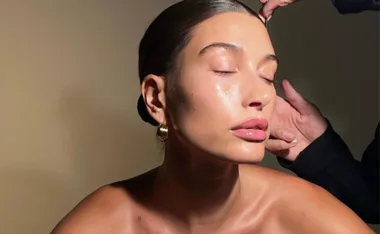
“We know that low‑humidity environments increase transepidermal water loss and reduce stratum corneum hydration, which over time can lead to dryness, roughness and barrier impairment.”

According to Australasian College of Dermatologists member, Dr Niyati Sharma, office air can aggravate skin conditions, including eczema and psoriasis.
“If there are buildings where you can’t regulate the temperature, that’s where the issues are because there’s warm, dry air being recycled,” Dr Sharma explains.
“If you’re already heat sensitive and then you’re having to be in this environment where you have no control, these skin conditions can flare up.”
Is it all in the air?
As it turns out, it’s not just the air at work that can put your skin under pressure.
According to Dr Sharma, both visible lighting from downlights and blue lights from devices can cause oxidative stress to the skin.
“If there’s fluorescent lighting or even downlights, visible light increases pigmentation,” Dr Sharma says.
Similarly, stressful work environments can also cause our skin to act up.

So, what’s the solution?
Fortunately, not all is lost when it comes to fixing “office air”.
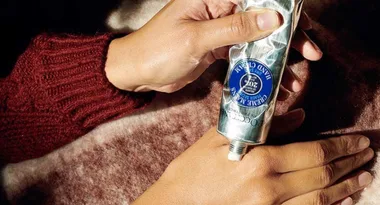
Dr Noushini suggests keeping a hydrating mist and humectant-rich moisturiser or serum on hand to counteract stale air.
“Ingredients such as hyaluronic acid, glycerin and panthenol have good data for improving skin hydration and supporting barrier repair,” she explains.
And, while we joke that “office air” is reason enough to work from home, Dr Sharma explains it’s valid. This is especially the case if you notice skin conditions like eczema flare up.
“If you see a GP or a dermatologist, they can write a letter to recommend changes or allow more work from home days,” she says.
Dr Sharma also recommends wearing sunscreen (yes, even for an office job) and turning night mode on your devices.
To hear more on this topic, tune into The WHO Group Chat podcast.

