

 HBO
HBO
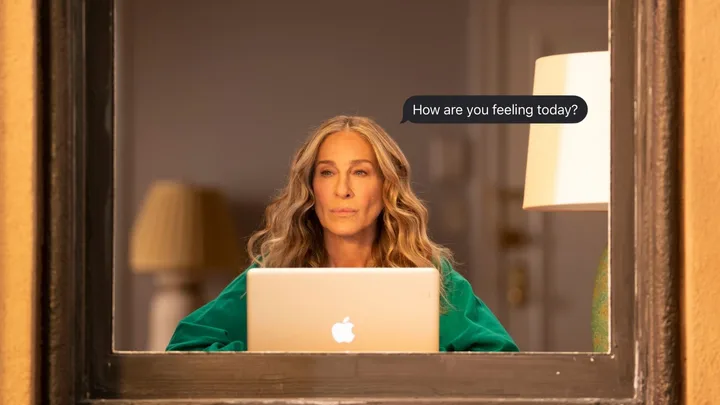
One of the first prompts to show up on ChatGPT is: “What’s on your mind today?” – and while for many of us, it’s drafting an email or searching the internet, a growing number of people are turning to ChatGPT for therapy.
It seems there’s a good reason for this, too. Per the Australian Psychological Society’s 2024 ‘Thinking Futures’ report, 75 per cent of participants reported that cost was one of their biggest barriers to seeking therapy. A lack of availability and not knowing where to go were close second.
But, is it actually a good idea to trauma dump on ChatGPT? WHO asked the experts.
What’s the risk of using ChatGPT for therapy?
According to psychologist Dr Jari Evertsz, mental health conditions are complex and AI chatbots shouldn’t diagnose them.
“There is a significant risk that people registering for use of an AI therapy tool are unaware of the role that some issues in their life might contribute, or that their particular pattern of issues might not fit a template,” Dr Evertsz says.
“Many people experience contributions from not one straightforward mental health condition but two or more.”
As it’s natural to withhold some information when seeking help due to modesty or anxiety, there is a risk of your emotional support bot giving the wrong advice.
Dr Evertsz explains that those with intrusive thoughts, hallucinations or suicidal ideation, are at risk of receiving inadequate help.
“People who are beginning to suffer from delusions are very vulnerable and can have trouble sorting and interpreting information correctly,” she explains.
“People who feel suicidal need help from a multidisciplinary team – of humans – who can each contribute their specific skills in monitoring and supporting the person through the most difficult time of their life.”

AI can’t replace human empathy
Sure, AI chatbots such as ChatGPT can mimick human tone; however, AI& U author Tracy Sheen explains they lack human understanding.
“There is a risk in thinking it knows us, when it’s really just predicting the next sentence based on data. When someone’s feeling vulnerable, that gap in understanding can lead to unintended harm,” she says.


“AI can sound empathetic, but it doesn’t actually feel anything. It doesn’t care, or relate on a human level – it simply mimics what it’s been taught that empathy sounds like.”
Tracy also notes that any connection we feel with an AI system is, unfortunately, completely unreciprocated.
Does using ChatGPT for therapy put your data at risk?
Like anything on the internet, Tracy warns that talking to AI for psychological support poses a bigger concern around our data privacy.
“When we open up to AI, it’s not always clear how that information is stored or used,” she says.
“People could be trading privacy for convenience without realising the implications of their choices, [while] platforms have a duty to be transparent and guide people to real help when needed.”
Tracy suggests that these online tools should clearly explain that they’re not a substitute for therapy, and they should in all instances offer easy pathways to real support along with clear disclaimers, privacy controls and links to crisis services.

How can ChatGPT help with therapy?
Ultimately, while AI is always on call and rarely costs anything, Dr Evertsz notes that at most it should support take-home therapy tasks.
“People often struggle against their old stagnant patterns of doing things – an AI tool might be able to check on their progress and encourage them to overcome some basic obstacles before they return for their next therapy session,” she explains.
“Chatbots may be accessible, but trained social workers, psychologists, psychiatrists, mental health nurses and hospital staff, as well as GPs, are the people who can carry out all of the different types of assessments and then interventions.
“These are truly tailored to the person’s individual needs.”
Mental health support is available 24 hours a day, 7 days a week. If you need help now, call:
- Lifeline 13 11 14
- Beyond Blue 1300 224 636

