
A growing number of celebrities have turned to property investment as a quiet but successful strategy for building wealth.
You may have heard of Chris Hemsworth’s $50 million eco-compound in Byron Bay, or seen aerial shots of Beyoncé and Jay-Z’s $315.5 million portfolio of homes scattered across Malibu and Bel Air. Nicole Kidman, currently starring in season three of Taylor Sheridan’s Lioness, is not only one of Hollywood’s most successful stars, but has also spent three decades buying, renovating, and selling properties all across the globe. From a mansion in Nashville to a suite of apartments at The Latitude Building in Sydney, this actress knows a thing or two about diversifying her portfolio.
It turns out that beneath the glamour of exclusive premieres and luxury holidays, there are multiple brick-and-mortar investments that give the general public just another reason to be envious of the A-lister life. However, property portfolios aren’t just for the rich and famous (although it would be remiss not to admit that financial stability helps).
Yes, not everyone has a house in Malibu to flip, but there are more everyday Australians living the property investment lifestyle than most people would think.
Speaking to WHO, Sarah Megginson, personal finance expert at Finder, and Sydney-based couple Joe and Gianna Ciardi break down the many misconceptions of property investing, what resources are available, and how being “anchored in your own location” is one of the biggest pitfalls.

What are the common barriers to investing?
Whether you’re in a stable financial position to invest or not, Megginson reveals that the “fear of making the wrong decision is the biggest thing holding Australians back from doing something”.
“We have access to almost too much information these days, and there are so many people ‘selling’ you their expertise, often claiming that their way is the right way,” she said. “It can be overwhelming and confusing knowing who to trust and how to invest well, and it’s also not a sure thing.
“It’s possible to lose huge amounts of money as a property investor – I’ve invested in property for over 20 years and not all of my investing decisions were good ones!”
While the reality that property investing may not always go right isn’t exactly what you want to hear, Megginson confessed that after years of “interviewing property investors every day about their strategies, decisions, profits and mistakes” and asking them what they’d do differently, “Nine of 10 times, the person would say: I just wish I had started sooner”.
“Property is a long-term investment, especially these days – in my early 20s I bought, renovated and sold apartments, but that strategy just isn’t profitable in most markets any more,” she said. “There are so many different ways to invest in property, and in my many years of interviewing investors and experts on just about every possible strategy, the one thing I’ve learned is that there is no “one proven way” or one-size-fits-all way to invest.
“It depends on your budget, your goals, your risk profile and how much time you want to spend on your investments.”

Your strategy can change over time
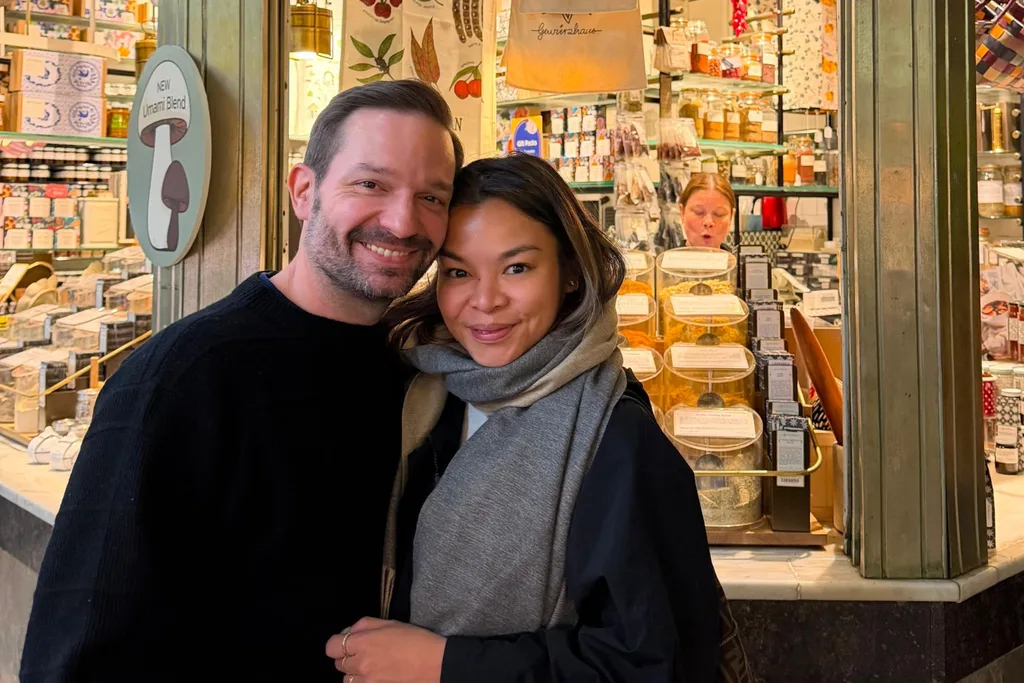
Joe and Gianna Ciardi are a Sydney-based couple who have built a highly diversified portfolio of around six properties across five states. Joe works in tech sales with Lenovo, while Gianna has a background in retail and centre management.
However, they never planned to get into property investing or set out at a young age to build a diversified portfolio. They also didn’t have a mountain of cash behind them to ease the process.
“To be honest, there wasn’t really a single moment where we sat down and decided property investment was going to be our grand plan,” Joe told WHO. “My first investment property was purchased when I was 23 years old, largely because my parents encouraged me to save and buy a house.
“At that stage I certainly didn’t have a sophisticated strategy. I was just trying to make what seemed like a sensible decision with the information I had at the time.”
Joe added: “Over the years, I learned that one of the biggest advantages in property investing is time. My second investment property came almost nine years later, and again it wasn’t the result of any carefully crafted plans. It happened because the house next door became available, and I already knew the owner, plus I happened to be in a position financially where I could afford to buy it.”
As they’ve gotten older, they became more “intentional” with their investing.
“What started as a couple of property purchases gradually evolved into a broader, diversified investment strategy that includes property, shares and business investments,” he said. “Looking back, the biggest difference isn’t that we suddenly became experts; we just became more deliberate about our decision-making and more willing to seek advice from people who knew more than we did.”
Their biggest strategy? Asking for help.
What resources are available?
While it’s easy to say ‘do your research’, it’s often not so easy to figure out where to start or look.
Alongside buyer’s agencies and property market research firms or property and financial magazines, Joe spoke to WHO about one resource in particular that aided his journey – InvestorKit.
InvestorKit is one of many data-driven property investment firms that help Australians identify high-growth markets and build strategic portfolios. In other words, they help you build your investment strategy, and for Joe and Gianna, this was the biggest help.
“One of the biggest things InvestorKit helped me realise was how easy it is to become anchored to your own location,” Joe said. “I see now that when most people think about property, they naturally focus on the areas they’re familiar with. That’s certainly how I thought about property investing early on.
“What InvestorKit brought to the table was a much broader perspective. They were – and are – looking at markets all around Australia and evaluating them using a consistent framework rather than relying on familiarity or assumptions.”
Joe admitted that this “challenged a lot of [his] thinking” and took him a while to get comfortable with the advice.
“What helped me get comfortable was re-thinking the way I evaluate a property investment decision,” he confessed. “I began to evaluate it more commercially and less emotionally, similarly to how I make investments in shares. I research the company and consider the available data. I don’t drive to the company head office, walk around the building and see how spacious the offices are or what the view from the top story is like, or whether the carpets and curtains will need replacing in the next few years.
“Working with them also reinforced something I was already realising in other parts of my life and career: specialists often see things that you don’t. They helped us understand how different markets behave, introduced us to opportunities we wouldn’t have considered ourselves and connected us with professionals across lending, conveyancing and property management.”
By actually engaging with a company like InvestorKit, Joe also admitted that they were able to learn at a much faster rate so that they could still make their own decisions.
“Important to add that as I’ve gotten older, one of the biggest lessons I’ve learned is that there’s value in recognising your own limitations,” he said. “Most people take their car to a mechanic when it needs servicing rather than doing it themselves, even if they understand the basics. I like that as an analogy for investing.
“There are people whose job is to spend all day thinking about specific areas of property, finance, lending or taxation, and there’s value in learning from them, just like there’s value in having a qualified mechanic work on your car.”
Property investing isn’t only for high-income earners or experienced buyers. It certainly isn’t guesswork, but it’s also not out of reach.
With research, market education, and professional guidance, building a portfolio is more than achievable.
Doubt is normal
Despite getting advice, doubt is still sure to creep in, and both Megginson and Joe and Gianna confirmed this.
“Waiting for something to change – usually, people are waiting for interest rates to drop or the market to cool – is the biggest reason why many people wait to invest in property,” Megginson said. “I remember being a junior property journalist in the mid-2000s, just before the GFC, and the median house price in Sydney was around $400,000. An expert I interviewed said that within 10 years, he forecast Sydney’s median house price to be over $1m, and I thought he was mad.
“But Sydney is land-locked to the east and Australians like living near water, so demand for property in Sydney will outstrip supply for decades. One day we’ll be saying, ‘Can you remember when the median house price in Sydney was only $1m?'”
While she admits that “it’s always prudent to stress test potential things that could happen” – like rising or falling interest rates, substantial rent changes, or changing tax laws – she also brought up a well-known saying.
“But there’s a saying: the best time to buy property was 20 years ago,” she said. “The second-best time is today. Be mindful of what’s happening more broadly, but then think about your own goals.
“If you want to own a property outright in 20 years so you can live off the rent in retirement, then every year you wait to buy it is another year you’ve missed the opportunity to pay down the investment property’s mortgage and reach your goal.”
Joe and Gianna admit that the doubt crept in more than once during their journey.
“Were there moments where we doubted ourselves? Absolutely! And there still are,” he told WHO. “I think anyone who invests will always be working through some uncertainty.
“Property purchases are some of the biggest financial decisions most people will ever make, so a degree of uncertainty is surely normal.”
Joe added: “For us, confidence didn’t come from having all the answers. Confidence came from doing our research, asking questions, learning over time and surrounding ourselves with trusted people who had expertise in areas we didn’t. And then, once you’ve done your diligence, sometimes you just have to make a decision to trust the information in front of you. Call it a well-educated leap of faith.”
“The uncertainty never completely disappears, but over time you become better at making informed decisions, despite that uncertainty,” he said.
It’s good to know that even a well-versed property investor gets cold feet about diving into the market, and it’s also proof that if you’re thinking of starting your journey, you’re not alone in your doubts, and there’s always a place to start.

Related stories
Native ad body.

Native ad body.




Native ad body.