
If you’ve ever gone to the supermarket to purchase condoms but backed out at the last minute or hid them under other items, you’re not alone.
According to Moments Wellness, an Australian female-first sexual health and intimacy brand that conducted the national Moments Sexual Health Study 2026, three in four Australian women have hidden, disguised or abandoned a condom purchase.
While discomfort buying condoms has fallen for the first time since Moments first began research – 29 per cent in 2017, 31 per cent in 2021, 23.9 per cent in 2026 – three-quarters of Australian women still described at least one strategy for not being seen buying condoms.
Two in five abandoned the purchase altogether.
When asked whether embarrassment or judgement was the reason for not buying condoms or putting them back on the shelf, 39.8 per cent of Australian women said yes.
For some, sex is scary. For more people, buying the tools – or rather, being seen buying the tools – they need for safe sex is even scarier.
It’s a pretty terrifying statistic, and it’s an ironic one too.
Women are told to be sexy, but when we actually express sexual desire, we’re looked down upon.
We’re taught about safe sex growing up – the bare minimum, at least…I hope – but when was the lesson to feel ashamed of carrying condoms? When did being prepared become something to be ashamed of?
Certified Sex Educator Eleanor Hadley spoke to WHO about this double standard, the risk that comes from these statistics, and what exactly needs to change.
“This number isn’t surprising to me, but it certainly is disappointing,” Hadley said about the survey’s results. “Given that our culture is still somewhat sex-negative and judgemental when it comes to women’s sexual liberation, I’m not surprised that many women have discomfort around purchasing condoms.
“In my practice, I always encourage my clients to have their own condoms on hand, but the stigma and fear of judgement from the public/cashiers etc can really get in the way.”

Why are women uncomfortable buying condoms?
In the 2026 Moments National Study, women reported a variety of different behaviours and strategies they use to avoid being seen buying condoms.
Some of these strategies included opting for self-checkout to avoid handing condoms to a person (48.5%), buying other items so the condoms were not the only thing in the basket (39.1%), hiding them under other products (27.7%), waiting until the shop is quiet (14.0%), buying online instead of in person (13.7%), asking a partner or friend to buy instead (13.4%), or visiting a shop where they were not known (12.2%).
In total, 75.2 per cent of Australian women reported at least one of these behaviours.
“This tells us quite plainly that buying condoms is perceived as shameful or embarrassing to many women,” Hadley told WHO. “A common tactic is ‘burying’ the condoms amongst a basket full of other items.
“The idea of simply going in to buy condoms only is a source of fear of judgement for so many women because the implication is that she likes sex and is about to go have it.
“Which, in a society that simultaneously insists women are ‘sexy’ yet looks down on women who openly express sexual desire, is a hard thing to reckon with.”
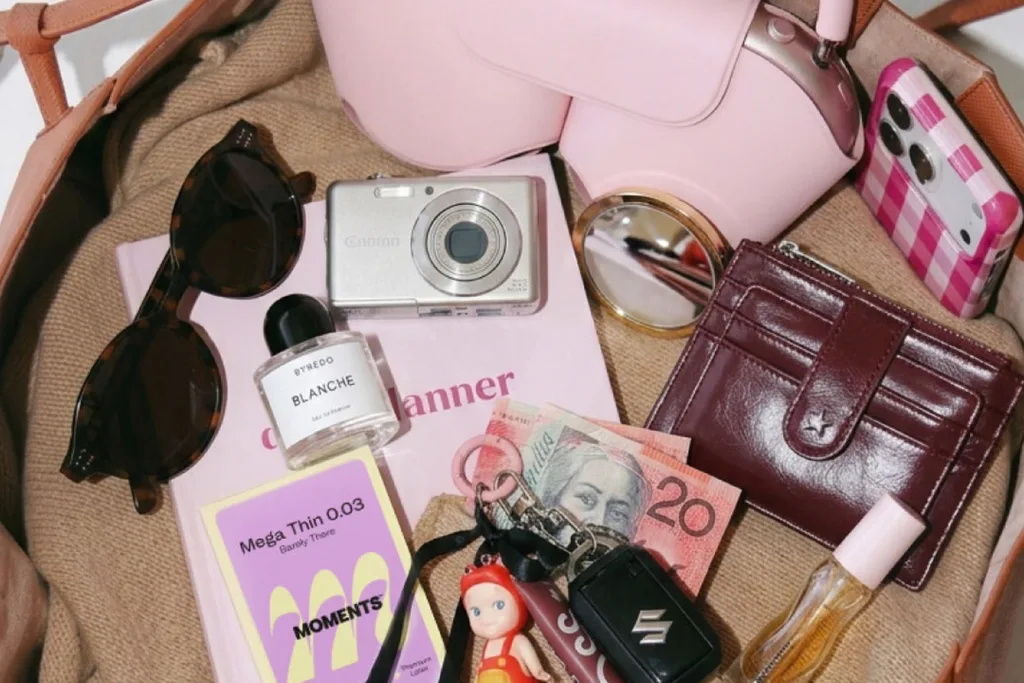
Women are labelled as ‘easy’ or ‘slutty’ when they’re simply prepared
When asked where this instinct or behaviour comes from – whether it’s passed down from mothers, friends, or media messaging – Hadley admitted that “it’s a blend of everything, really”.
“Women protect themselves from judgement around being seen as ‘easy’ or ‘slutty’ when they are simply prepared,” she said. “We often learn – whether that’s directly from parents or friends, or indirectly through movies or social media commentary – that it is the “man’s job” to buy and carry the condoms.
“And so I think many women hold that expectation.”
It’s a man’s job to be prepared, and it’s the woman’s job to face the consequences if he’s not.

Buying a condom is harder than talking about sex with your partner
These statistics don’t mean that women are afraid to talk about sex at all. In reality, they’re more comfortable with the conversation than the counter.
The Moments Sexual Health Study 2026 revealed that 81.5 per cent of Australian women say they would feel comfortable asking a new partner to use a condom, but only 76.2 per cent say they feel comfortable buying them.
“Speaking to a partner about your safe sex practices is an intimate act done with someone you trust and feel safe to be vulnerable with,” Hadley explained. “However, going out in public to purchase condoms comes with it the risk of being judged – implicitly or explicitly – by anyone who notices.
“It feels exposing to women because it’s essentially admitting, publicly, ‘yeah, I have sex’. For men, this is often celebrated. For women, we’re judged for the same act.”
Now, this doesn’t mean that men don’t experience any stigma at all. Hadley believes that they do to some degree, especially since “sex is a private thing and something that – unfortunately – is shrouded in a lot of shame in our society”.
“I’m certain men experience a level of discomfort and fear of judgement, but I think it would be considerably less than women’s experience,” she says.
In the end, this dynamic reinforces the public belief that “men are the ones who want and enjoy sex and that if women are buying condoms, it assumes a level of promiscuity about her”.
“In our society, sex is still often perceived as something men *do to women* – something that men crave and women don’t,” Hadley added.
What are the real-world risks of this behaviour?
Discomfort isn’t the only side effect of this purchasing behaviour.
“If women, for whatever reason, don’t end up with their own condoms, then it puts them at risk of unsafe sex,” Hadley explains. “If they assume the man will supply condoms but he doesn’t, many women have admitted to just going along with it anyway and using no contraception at all.
“The flow-on effect of this can lead to increased use of emergency contraception, contracting STIs, or unwanted pregnancy. The stigma of women buying and carrying their own condoms has serious consequences.
“It leaves them at risk of being unprepared when they need it the most.”

What needs to change?
For things to change, women’s pleasure and desire need to be normalised, and this can only be achieved through “more open and honest discourse in media about this topic”.
“Another factor I would consider is the marketing surrounding condoms,” Hadley said. “Most condom brands out there are very clearly targeting men – with dark packaging and masculine branding.
“This feels quite exclusionary to women and almost sends the subconscious message that condoms are for men to buy. In actuality, it takes two to use a condom, so I think the marketing around them should be more inclusive of the people using them.”
Hadley added: “Visual merchandising and placement within stores is also a huge factor. I think they should be amongst other wellness products and not stored behind a counter where you have to ask for them.”
If you’re a woman who can relate to any part of these statistics, Hadley’s advice is this: “Your sexual well-being is way more important than what any stranger thinks of you.”
Read the full findings of the Moments Sexual Health Study 2026 at momentswellness.com.au.

Related stories

Native ad body.

Native ad body.




Native ad body.