*Names have been changed for anonymity purposes*
Looking at TikTok videos of couples finding out they’re pregnant together, crying through smiles and hugging as they stare at the positive test, still gives Rose* a pang of sadness.
She has three children of her own. But she never had that moment.
Rose is someone I’ve known for years through work. I knew she had children young, and I knew she had eventually left a difficult relationship. But it wasn’t until she started talking about those years that I realised just how much shame she had carried with her.
The not-so immaculate conception

“I was 17 when I found out I was pregnant,” she told me. “I was about seven weeks, but honestly, I think I knew deep down much earlier.”
There were plenty of reasons for her to have ignored that gut feeling. She was young. She had grown up in an extremely religious society. She was terrified of her parents’ reaction. And, perhaps most significantly, she had just broken up with her boyfriend.
Rose had already seen the red flags in their relationship, but the thought of what people would say if she raised a baby alone led her back to him.

“I was so ashamed,” she said. “I had already disappointed everyone by getting pregnant. The idea of being a single mother on top of that felt unbearable.”
Her parents were devastated.
Her father barely spoke to her for most of the pregnancy. Her mother cried constantly, repeatedly telling Rose how disappointed she was that she had sinned. At one point, she even suggested that Rose have an abortion.
“I remember thinking, ‘How ironic.’”
Time stopped

She had good friends around her – people who tried to reassure her and tell her that she would be OK. But their encouragement couldn’t compete with the shame she felt everywhere else.
And while everyone around her seemed to be moving forward with their lives, Rose felt as though hers had suddenly stopped.
“My friends at the time were heading off to college and travelling, and I was at home raising a baby.”
She never regretted having her children. Not for a second. But she knows now that she did miss out on those years of discovering the world, growing into herself and figuring out who she was outside of being a mother.

“My life became very small and insular,” she said. “I focused solely on keeping my kids alive and happy.”
She remembers strangers noticing her bump and glaring.
“I couldn’t speak about my pregnancy. I couldn’t ask my mum questions. I couldn’t even say I was feeling sick. I just felt like I was carrying everyone’s shame, and eventually I took it on as my own.”
When her baby was born, things changed. Her family eventually came around and fell completely in love with their grandchild.
But Rose says that didn’t mean they suddenly started to help her, in fact, they made it very clear she was on her own for the difficult parts.
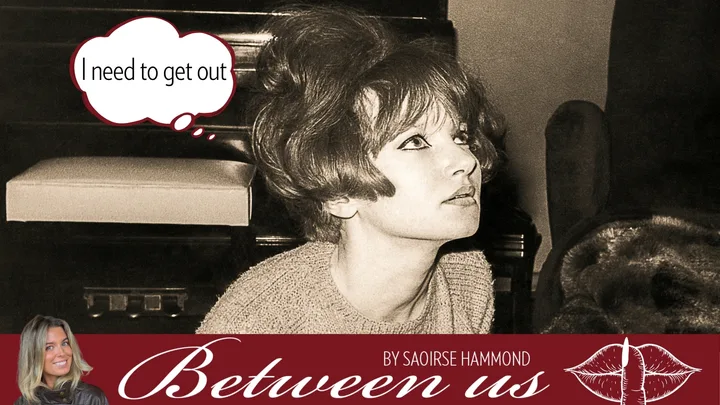
“I wanted to pack my bags and leave,” Rose said. “But where was I going to go?”
Stayin’ alive
When her child was around two, Rose and her partner moved into their first home together.
And that’s when, she says, things went from difficult to dangerous.
The cruel remarks became more frequent. The jealousy became extreme. The physical abuse started escalating.
But Rose hid it.
She had already caused enough pain for her family, she thought. She couldn’t bear for them to know that she’d failed at this too.
So she stayed.
One house move became two and then three. And then there were two more babies added to the picture.
Each of her children brought enormous joy into her life. But while her family was growing, her relationship was becoming darker.
“Abusive, unhelpful, cruel,” she said. “He was like this dark cloud over me and the kids.”
Rose says she also began to overcompensate for what she believed she had brought her innocent children into.
“I felt like I had to make up for it somehow. I focused everything on them. Keeping them happy, spoiling them, making sure they knew they were loved.”
For years, she couldn’t understand why she had stayed.
But the reality, she says, was complicated. By then, she had been beaten down emotionally to the point where she genuinely believed she couldn’t do it alone.
“I was terrified to leave. I had nothing. We were tied into so much financially. It wasn’t a case of just packing up our lives and moving on.”
The control was real.
And yet, looking back, Rose says there is an irony in the belief that she couldn’t manage without him.
“The reality was, I had been doing it alone practically the entire time.”
Rose’s reason
Eventually, as her children grew older, something inside her shifted.
She started thinking about the relationships they would have themselves one day. Her daughter would grow up and enter a relationship of her own. Her sons would grow up and have partners of their own.
And Rose realised she couldn’t stay.
“I knew they were getting older, and I knew they would be going into their own relationships in the coming years. I couldn’t sit back and let them repeat my mistakes.”
She didn’t want her daughter to believe that this was what a relationship looked like.
“I didn’t want my daughter thinking that men can speak to you or act towards you like that.”
And she didn’t want her sons to look at their parents’ relationship and believe that cruelty, disrespect and control were normal ways to treat a partner.
That was when Rose knew enough was enough.
“I had to grow up and get us all out of it.”
It took more than one attempt, but eventually, she did leave.
Even now, she says, there are things she has to work hard not to blame herself for – like the shame of having stayed and the fear that she traumatised her children.
“But none of those thoughts are helpful,” she told me.
What is real, she says, is that she and her children are incredibly close. Her parents are now one of her biggest sources of support. They are safe in their home.
“And I’m still alive.”
Fairytale ending… sort of
About ten years ago, Rose changed careers and began working with people experiencing situations similar to the one she had lived through.
It has given her a perspective she didn’t have when she was in the relationship herself.
She knows how frustrating it can be when someone returns to an abusive partner. She knows how heartbreaking it is to watch someone go back to the person hurting them.
“But there is no feeling like realising they’re finally done,” she said.
And yet, even after helping others leave, Rose says she still has moments when her own guilt catches up with her.
She remembers attending one of her first conferences in her new career. The speaker began talking about adverse childhood experiences, the so-called ACEs associated with childhood trauma.
As the speaker listed them, Rose began mentally ticking them off. Her children had witnessed them all.
Then came the statistics about children exposed to multiple traumatic experiences being at greater risk of substance abuse, physical health problems, socioeconomic difficulties and behavioural issues.
“I nearly spat out my coffee.”
She looked around the room and realised she was sitting there listening to someone describe all the ways she believed she had potentially damaged her children.
Except when Rose looked at her children, that wasn’t what she saw.
“They’re kind, loving, intelligent, hard-working, confident people,” she said. “They make it very hard for me to believe I’ve done anything but a great job raising them.”
There was something almost funny about the contradiction.
For years, Rose had told herself she was a failure. But the three people she had raised seemed to tell a very different story.
Today, she wants other people living with shame “for whatever reason” to know that doesn’t mean they deserve a bad relationship.
“You do deserve to be safe and loved.”
She knows asking for help can feel impossible when you’re convinced you’re not worthy of it.
“But the hardest part really is asking for it,” she said. “If I can do it, anyone can.”
Back and better than ever

After years of swearing off men and convincing herself she was better off alone, Rose has started dating again.
She hasn’t found her Prince Charming yet. She’s met some lovely men. They just haven’t been quite right.
And for perhaps the first time in her adult life, she’s completely okay with that.
“I’m not settling this time around,” she told me. “I deserve it all. Everyone does.”
(If you or someone you know is impacted by sexual assault, domestic or family violence, call 1800RESPECT on 1800 737 732)

Related stories

Native ad body.

Native ad body.


Native ad body.