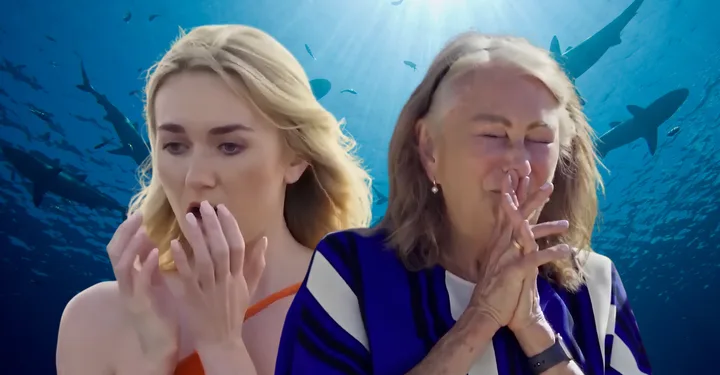
When shark attacks are splashed across front pages and coastal communities are grieving real losses, a new reality show like Shark! sending celebrities into the water with the apex predators was always going to raise eyebrows.
And that’s before you even consider the state of the oceans themselves. Many shark species are already under pressure from overfishing, habitat loss and warming waters, and conservationists have long warned that even well‑intentioned wildlife tourism can tip a fragile ecosystem off balance.
We consulted marine biologist Lawrence Chlebeck of Humane World for Animals Australia to provide his take on whether the show feels necessary or damaging at a time when these creatures and their habitat are already under intense pressure. And interestingly, he had a surprising take…
The public outrage over Shark!
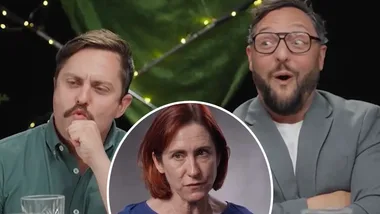
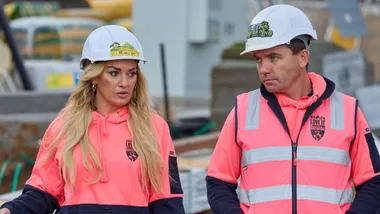
Shark! sends a cast of familiar Aussie faces – Scott Cam, Lynne McGranger, Ariarne Titmus, Matt Nable, Tammy Hembrow and Sam Thaiday – to the Bahamas, where they face a series of increasingly tough physical challenges that put them in the water with real sharks.
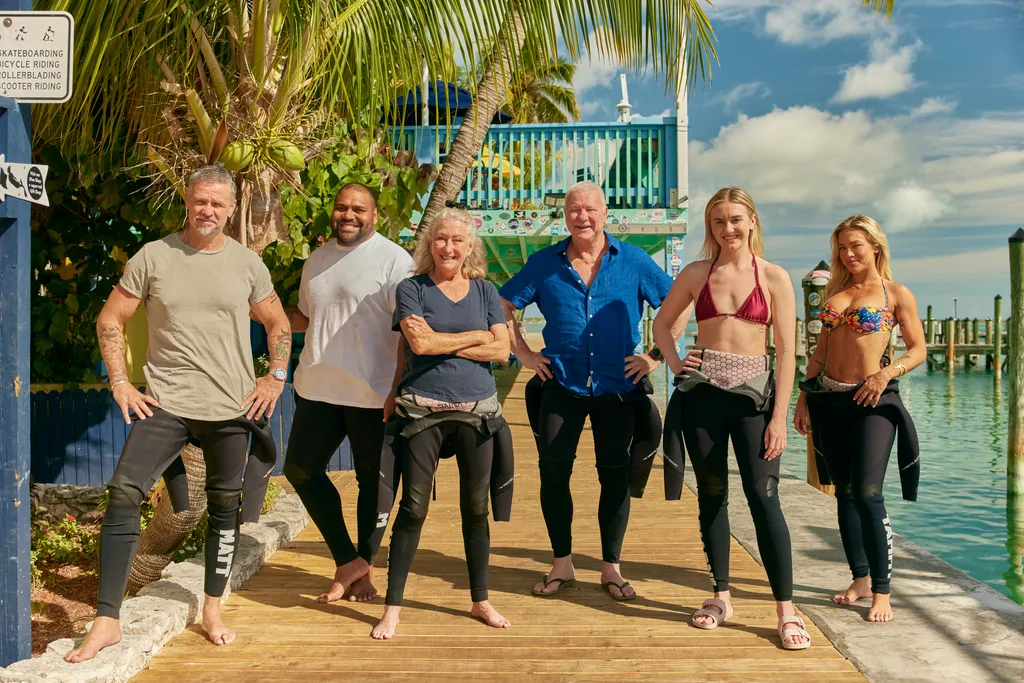
It doesn’t just ask its contestants to confront their fears, but it inadvertently asks viewers to decide whether turning vulnerable animals into prime-time entertainment is exploitative, or exactly the kind of perspective shift we need.
Many have taken to the comments section of the social media promo for the new show to have their say, with one person commenting, “Leave the sharks alone. They aren’t here for entertainment“.
Many others echoed the same sentiment.
“Perhaps we should let them live peacefully in their own habitat,” another wrote.
The horror of recent Australian shark attacks
Over the past year, the anxiety Australia has had surrounding sharks has been very real. A cluster of shark attacks has left families grieving and beach communities rattled, and as Lawrence notes to WHO, it’s been “a tragic and challenging time for all Australians.”
Many took to social media to voice their concern over the sensitive time it is right now following the string of attacks involving victims Michael Jensz, Steven Mattaboni, Nico Antic, Livia Mulheim, Mercury Psillakis, among others.
“In light of the recent death in Western Australia, shouldn’t you at least postpone the show? Putting money before the grievance of many families,” one person wrote online.
“This show should be cancelled in respect for the many people who have recently lost their lives. There was one two days ago and a [12] year old boy,” wrote another.
Speaking to Yahoo Lifestyle, Channel Nine confirmed that the network decided not to air the episodes in WA, out of respect for the family of a 38-year-old father who was tragically killed in an attack off Rottnest Island.
“Given recent events, we have made the decision to postpone the Perth broadcast premiere of Shark!” the spokesperson said.
However, while acknowledging the profound grief of these communities, Lawrence argues that this tension is exactly why we can’t look away. He argues this is the moment for “confronting and tough conversations” about how we share the water with sharks and prevent further injuries or fatalities – not in a way that demonises them, but in a way that’s grounded in science and empathy.
“Understanding is exactly what we need to underpin our approach to their humane management in Australia and ensuring shark safety on our beaches,” he tells us.
From what he’s seen so far, Shark! is at least trying to sit in that uncomfortable space, “adding to that conversation constructively and encouraging an understanding of sharks” that he says is essential to humane management and smarter beach safety.
The Jaws effect and the lingering stigma of sharks
Sharks have spent decades being cast as monsters first and wildlife second, which has done real damage to conservation efforts. You only have to think back to the collective anxiety that followed the release of Jaws.
Even our language – ‘attack’, ‘man‑eater’, ‘rogue shark’ – keeps casting them as calculating predators, not animals responding instinctively in their own habitat.
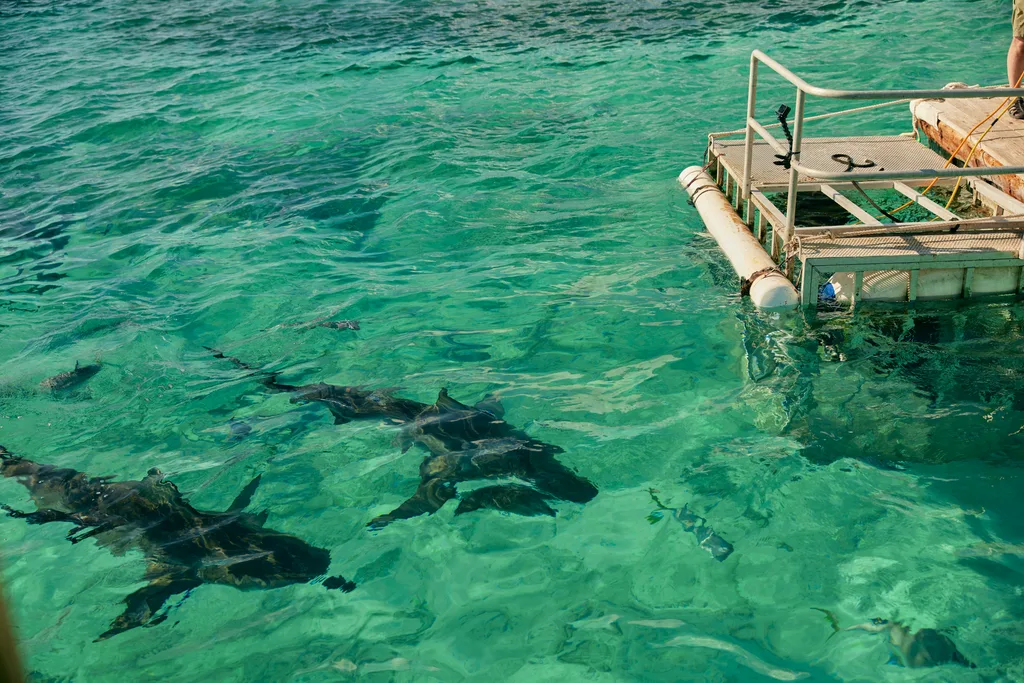
“Shark conservation has long been hampered by stigma surrounding sharks that has been perpetuated by media and popular culture,” Lawrence says, which is why he’s “excited to see Shark! break that mould and bring shark conservation messaging to prime time viewing for Australians.”
In his view, the series has a rare chance to reframe sharks as “fascinating creatures who are vital to the ocean’s ecosystem” and to quietly introduce viewers to the habitat loss, climate change and conservation challenges they’re up against – not just the fear they inspire.
‘We need audiences to care more than ever’
With so much of our wildlife under pressure – from “habitat loss” and “climate breakdown” to “direct persecution and exploitation” – Lawrence argues that “we need audiences to care more than ever.”
That’s where he sees a role for shows like Shark! if they’re done carefully.
“As long as animals are not stressed and natural behaviours are not disturbed, wildlife entertainment shows can be a platform to engage large audiences and foster a much-needed sense of awe, wonder and respect for precious species.”
It also helps that the Aussie cast and hosts voice their support for shark conservation throughout the episodes, despite some of them having crippling fears of the animal.
WHO also spoke to celebrity contestant Tammy Hembrow before the show’s release about what she learned on the series. She said she came away with “a lot more respect” for sharks, having seen “the beautiful creature that they are,” adding, “it’s their home, it’s their environment, and we’re the ones stepping into it.”
Support for robust regulation
Shark! was filmed in the Bahamas, which has been a shark sanctuary since 2011 after it banned commercial shark fishing and the trade of shark products across roughly 243,000 square miles of ocean. Recreational shark fishing is tightly controlled, research requires permits, and activities that could damage shark habitats are restricted – all part of a broader push to make shark diving and eco‑tourism sustainable.
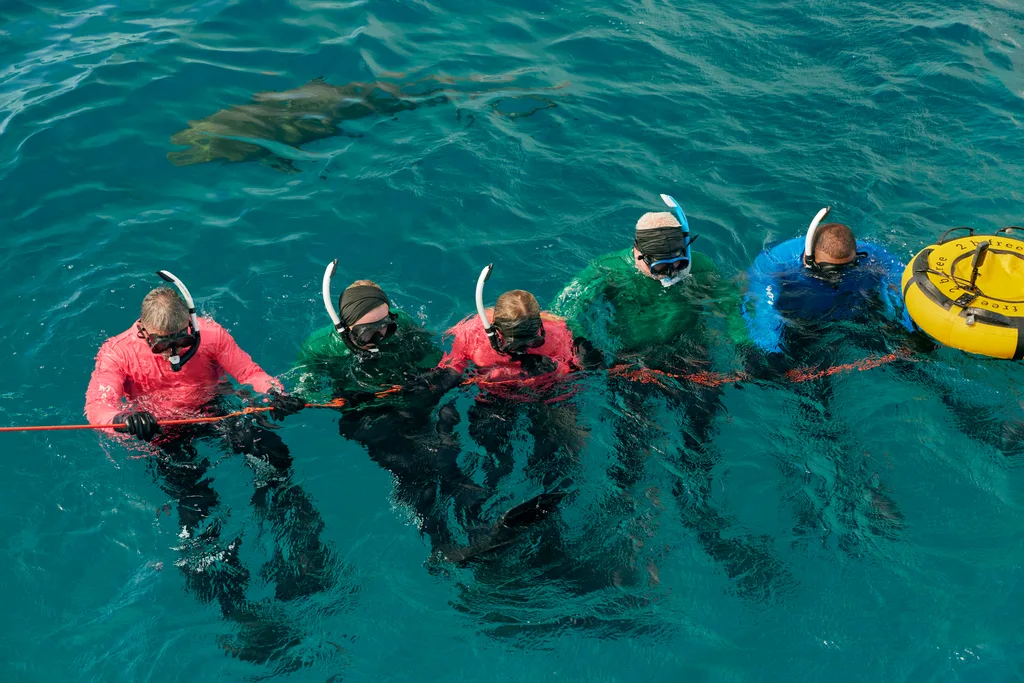
In that light, it appears Channel Nine filmed in a country that already takes shark protection seriously. Still, that hasn’t stopped some viewers from questioning the ethics of the production online.
“They use irresponsible means to attract the sharks to the boats. Absolutely this should be cancelled,” read a comment on Channel Nine’s Instagram.
“Leave the sharks alone. Unnecessary intervention by humans with food. Animals aren’t for our entertainment or to make the rich, richer,” wrote another.
While Channel Nine has not explicitly detailed its handling methods, Lawrence says “there’s certainly a need for all forms of wild animal tourism to be effectively regulated and monitored to ensure there are no negative impacts to animals, especially when tourism activities pose a risk of changing natural behaviour, like baiting or chumming sharks.”
“We’re supportive of the development of robust regulation based on the best available science that helps people view wild animals in their natural habitats in a safe, non-intrusive and sustainable manner so that they can inspire awe and respect for them and for the natural world.”

Related stories
Native ad body.
Native ad body.

Native ad body.