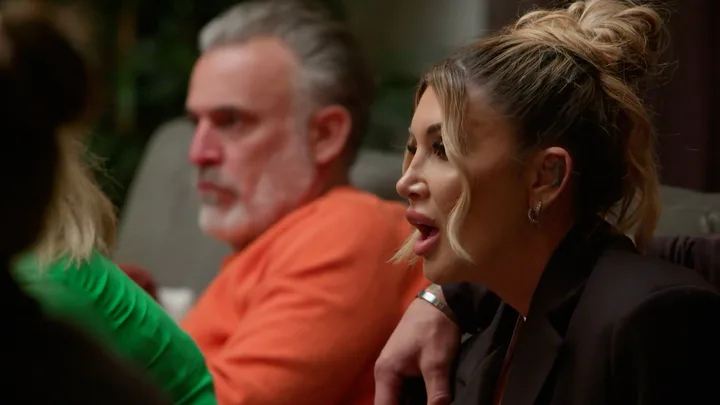
Tonight’s commitment ceremony, which aired on Sunday, February 22, once again brought the heat. With half-hearted apologies, couples leaving, and actions that spoke far louder than words (*cue the runaway bride*), it’s no wonder contestants are getting lost amidst the lies.
However, one word that stood out, mostly because it seems to always come up on MAFS, was “gaslighting.”
As terms like this get thrown around, it’s brings up questions about the danger shows like MAFS pose to people watching from home.
WHO sat down with Stan’s After the Dinner Party hosts Brittany Hockley and Laura Byrne to discuss the new show which aired this week.

While mentioning their excitement about being able to have conversations that can “change the narrative” for the better, Byrne touched on how majority of what we learn about relationships, now comes from reality tv.
“I also think that there is something that’s incredibly valuable about seeing it play out, naming it and having the conversation off the back of it,” Byrne said.
“For a younger audience, who is in the dating world and experiencing this stuff, there is maybe this question of like, ‘What’s gaslighting? Well, I just saw it play out on TV.”
But, given what we’ve seen play out this week, is MAFS setting the best example for navigating relationships?
Gia accused Danny of “gaslighting”
A stand-out moment from the commitment ceremony was Bec and Danny’s time on the couch.
During the explosive dinner party in the episode prior, Gia whispered to Bec that Danny told Gia she was his type, which obviously shocked the bride after the tensions her and Gia had been having all season.
While Gia, speaking to TV Week, insists that the exchange happened during an off-camera moment at Bondi Icebergs in Sydney, Danny claimed on The Today Show that he did not make those comments, even asking for a lie detector to prove his point.
Whether he said it or not, Danny’s response to Bec’s confusion has fans agreeing that he went about it the wrong way.
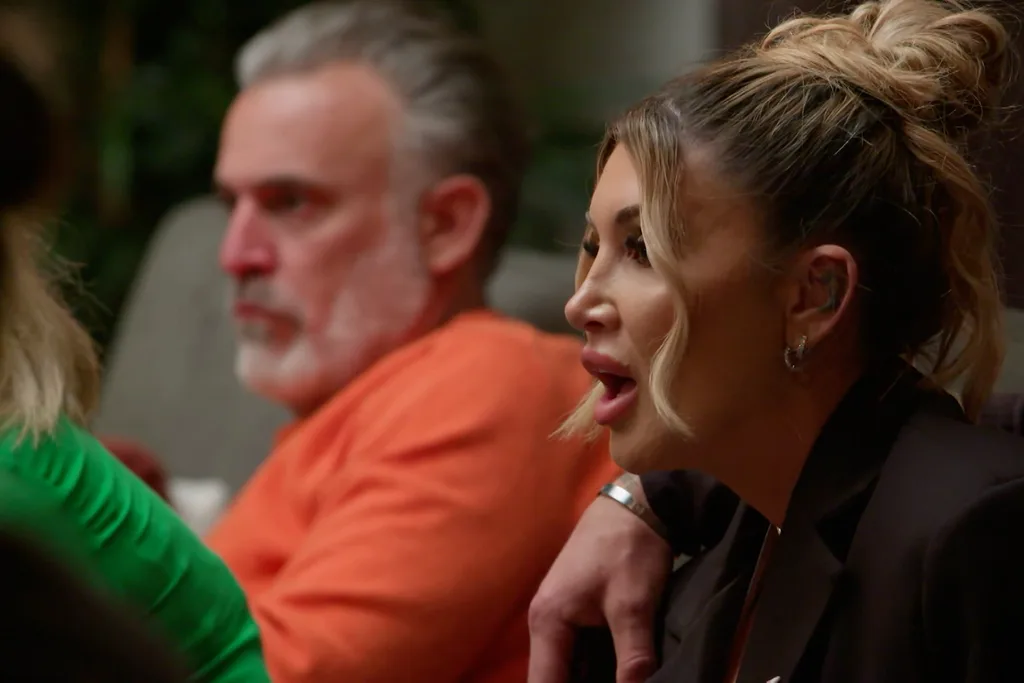
Dangerous trend demonstrated on MAFS
As the episode opens with a devastated Bec crying to the camera, saying that she “hasn’t felt this low in years,” Danny expresses his disappointment in Bec as it’s revealed they spent the night in separate apartments.
Speaking to the producers, Danny says that “she has to prove to me that she’s ride or die”, and didn’t hold back in telling Bec how much her quick loss of trust hurt him.
“To believe their lie over your husband, it just hurt me.”
However, while Danny has the right to be upset, what he was missing in his response was a little bit of grace, particularly since Bec did turn around and believe him again.
By making Bec question whether her feelings towards him were pure or that she wasn’t ‘all in’ because she questioned him for a moment – which we know was hinged on past insecurities – seems unfair at best and manipulative at worst.
It’s the classic case of one partner doing something wrong, only to deflect blame onto their other half for reacting to the transgression, thereby flipping the script on who the “victim” actually is. It’s a dangerous trend – and not one that is conducive to a healthy relationship.
And while no one is really sure what really went down, what was said or unsaid, throwing a term like “gaslighting” into the mix doesn’t help clear things up. If anything, it’s making viewers more confused and perhaps distracts from the true meaning of the show. That is, to give a platform that reflects what everyday people are experiencing in their dating lives.
Speaking to WHO, Byrne noted that “we’ve now been given labels and terms and we’ve been able to identify the really intimate inner workings of people’s relationships” on a show like MAFS. “Because when else do you get to see it play out like that?” she said. “Like when else do you get to sit in someone’s therapy session and watch the way that people speak to each other? That’s what this show provides.”

What role does MAFS play in all this?
Exposure to the kind of behaviour we’ve witnessed this week, like “gaslighting” and “bullying“, tows the line between being helpful and polarising or harmful.
In an interview with WHO, Byrne noted that shows like MAFS are “really confronting for people” because while it is supposed to be entertainment, “for a lot of people, it’s a mirror.”
“It really shows people, oh, that’s what my partner did to me or that’s how my partner speaks to me. Actually, I’ve been putting up with that for X amount of time. I really do think that as much as some of it feels sensational for a lot of people, the reason why it’s super confronting is because it’s very real.”
Since shows like MAFS can lean into the drama, they also have a big role in reflecting a lot of viewers’ realities.
So, after what was shone back at audiences this week, fans are starting to question the future of the show and the moral role it plays in helping audiences with these relationship terms, rather than using them for ‘clicks.’

Related stories
Native ad body.

Native ad body.




Native ad body.