


Content warning: This article references domestic and family violence, which some readers may find distressing.
For many families, Christmas is a season of reunion and joy. But for thousands of victim-survivors of domestic and family violence (DFV), the festive period is not a time of comfort. In fact, it’s one of the most dangerous times of the year.
According to the NSW Bureau of Crime Statistics and Research (BOCSAR), New Year’s Day consistently records the highest number of domestic-violence-related assaults, with the early hours between midnight and 3 a.m. being especially volatile. Christmas Day and Boxing Day follow closely behind, creating a holiday period characterised by heightened risk.
Delia Donovan, CEO of Domestic Violence NSW, describes the season as a “perfect storm” for those living with violence. “The Christmas and New Year period is especially dangerous for victim-survivors because it concentrates a perfect storm of risk factors,” she tells WHO, noting that while the community may associate the holidays with rest or celebration, many victim-survivors face escalating threats behind closed doors.
“Christmas Day and Boxing Day record around 78 percent more domestic-violence-related assaults than an average day, and New Year’s Day sees an even more severe spike with around a 118 percent increase,” Delia notes. And these statistics only account for what’s reported to police, meaning the reality is probably far worse.
She goes on to explain that the spike in violence has predictable roots. The festive season often means more time at home, increased alcohol use, financial pressure and heightened emotional stress, all of which can escalate abusive behaviours and reduce opportunities for victim-survivors to seek help. These pressures collide at once, leaving many families with fewer avenues for safety, support, or a way out.
Still, Delia is careful to emphasise that these factors are explanations, not excuses. “These factors help explain why violence spikes, but they do not excuse it. The choice to use violence always sits with the person using it,” she says.
A season of increased danger and reduced support
One of the most insidious dynamics of the holiday period is isolation. Schools close, workplaces shut down, and community routines are disrupted. This leaves victim-survivors without the informal safety nets that normally allow them to disclose harm or seek help discreetly. Many services also operate at reduced capacity. “Courts, support services and government agencies often operate at reduced capacity over the holiday period,” Delia explains to WHO. “This slows access to emergency protections and support.”
Loved ones hoping to recognise signs of abuse will probably find that many victim-survivors show none outwardly. “There is no ‘perfect victim’ and no ‘ideal perpetrator’, which means anyone can experience DFV, and we can never truly know what happens behind closed doors,” Delia says. She notes that survivors may appear withdrawn, anxious, unusually quiet, or increasingly isolated, but equally, many continue to mask the abuse out of fear, shame, or the belief that others won’t understand.
What matters most is how we respond when someone does reach out. “The first step is believing them and listening without judgment,” Delia explains. Pressuring someone to leave can escalate danger. “Leaving can often be the most dangerous time for them — you need to follow their lead, because they are the experts in their own safety.”
Support that helps families rebuild
Domestic and family violence rarely ends when a survivor leaves the home, yet many of the support services are stretched thin. “In NSW, core funding for these services has not increased in over a decade,” Delia warns. Some services are operating at up to 900 percent of their funded capacity, leaving staff overworked, under-resourced, and still committed to filling the gaps however they can.
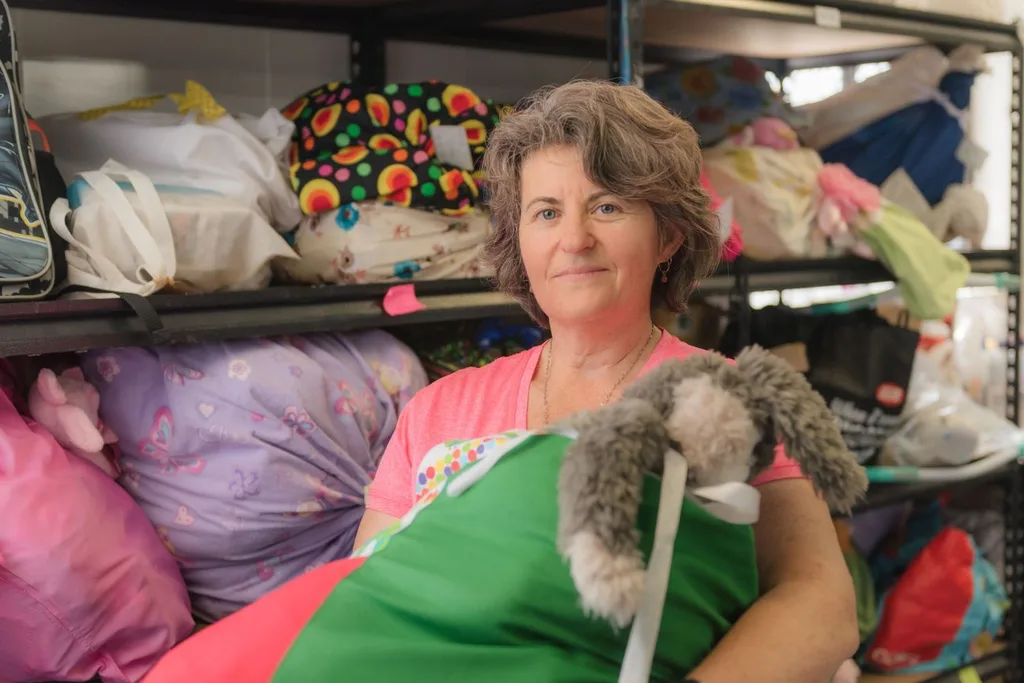
This is where local charities like We Care Connect step in. The organisation prepares carefully curated bundles of essentials (think: clothing, prams, cots, toys, books and more) for children and parents escaping violence, hardship or homelessness. With the support of a recent $10,000 donation from Mounties Group, We Care Connect will provide essential care packs to 400 children and young people aged 0–18 over the Christmas period and beyond.
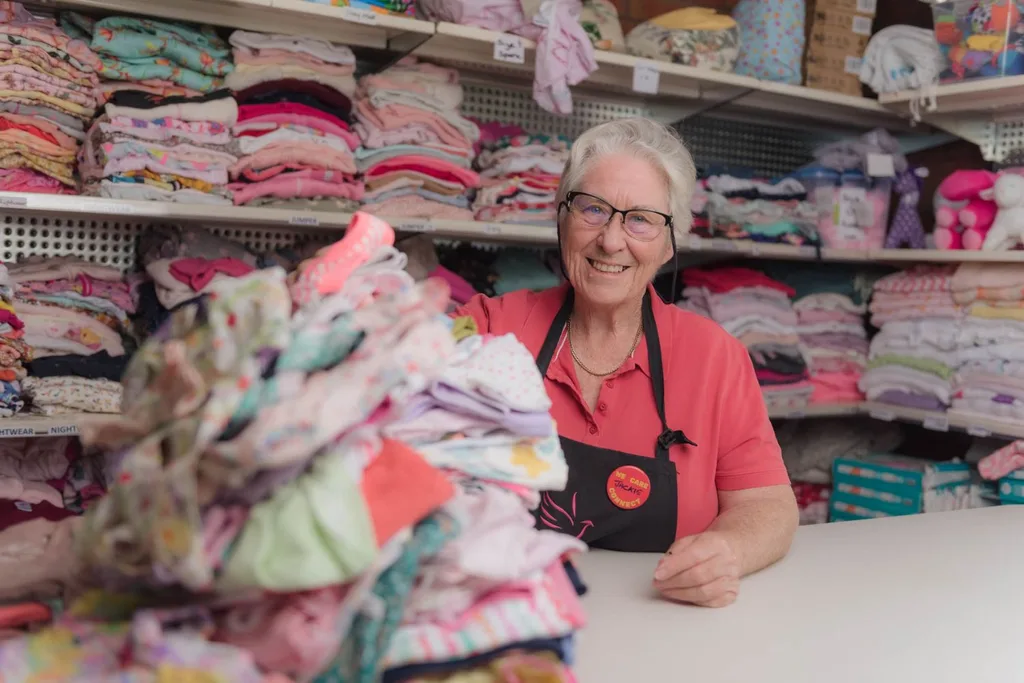
“Every package we deliver represents more than just essentials; it’s a reminder that someone cares,” says Helen Baker, Founder and CEO of We Care Connect. Case workers have seen how powerful that reminder can be: one family in refuge, who had lost everything to domestic violence, received not only clothing and toys but K-pop T-shirts carefully chosen for their teenage children. It’s a thoughtful gift that also offers a sense of identity at a time when you need it most.
Their work is part of a broader effort by Mounties Group to support domestic and family violence prevention and awareness, including national education and community action programs rolled out in 2024.
As the festive season approaches, organisations like We Care Connect remind us that safety and dignity can take many forms. Sometimes, it’s a care pack filled with essentials and a simple message: you are not alone.
If you or someone you know is experiencing domestic or family violence, call 1-800-RESPECT (737 732) or visit 1800respect.org.au/

Related stories

Native ad body.

Native ad body.




Native ad body.