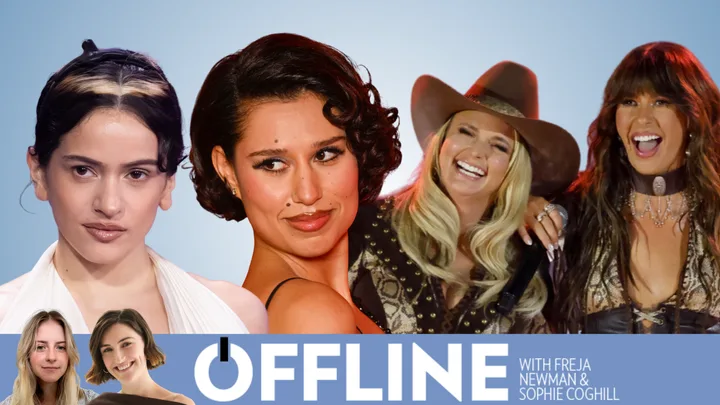
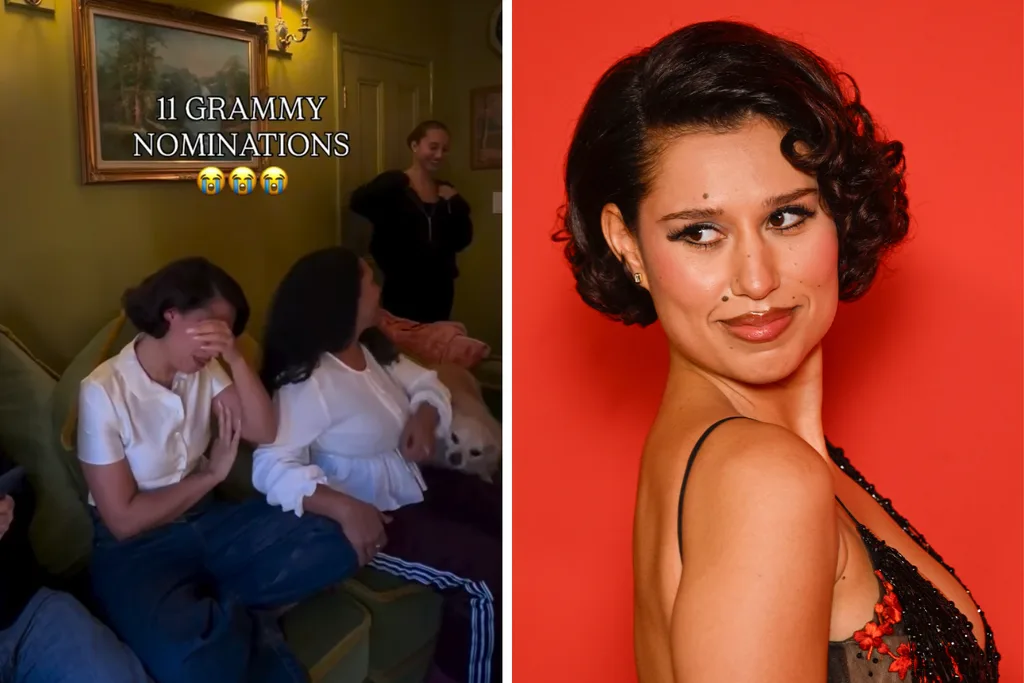
For the first time in history, women dominated the Grammys this year with RAYE, Rosalía, Ella Langley, Miranda Lambert, Olivia Rodrigo and Phoebe Bridgers, the six most-nominated artists.
RAYE leads with 11 nominations, tying Beyoncé’s record for the most nominations received by a woman in a single year. Rosalía follows with nine, and Ella Langley, Miranda Lambert, Olivia Rodrigo and Phoebe Bridgers each have seven.
Beyoncé also became the first artist ever to hit 100 career nominations.
While we can and absolutely should celebrate this milestone and these women, these nominations have also opened up space for the types of conversations we should be having about the genres and artists that are too often underrepresented and overlooked.
Speaking to WHO, Poppy Reid – music and culture journalist and Co-Founder of Rolling Stone AU and Variety AU – revealed why these 2027 Grammy Awards nominations are so significant, and what this year’s biggest snubs say about today’s music industry.
What was so significant about the women spotlighted in the 2027 Grammy Awards nominations?
Women in music are getting their flowers. But the real story is that it isn’t just one type of woman or one type of sound.
“What I’m loving about the range of women being celebrated is how different they all sound, but they’re also coming under similar categories,” Reid told WHO. “Ella Langley and Miranda Lambert being celebrated for country music, Phoebe Bridgers coming from an indie rock world, Olivia Rodrigo moving between pop and rock, but mainly RAYE and Rosalía excite me so much [with] these ambitious records that they’re making; it’s orchestral, it’s jazz, it’s multilingual.
“There’s real recognition of authorship here. These are women shaping the music as well as performing it.”
To see experimentation, vulnerability and strong technicality spotlighted in so many genres, by so many voices, is something to celebrate.
“But I think the coverage needs to obviously move beyond counting women and actually discuss their work. Let’s celebrate the milestone, but let’s also move beyond counting women and give them the detailed discussion they’ve earned.”
What were the biggest snubs from the 2027 Grammy Awards nominations?
As always, the year’s biggest snubs earned as much media attention and social media frenzy as the successes.
This year, there were exclusions that said a lot about what the industry is actually listening to, as well as what it values.
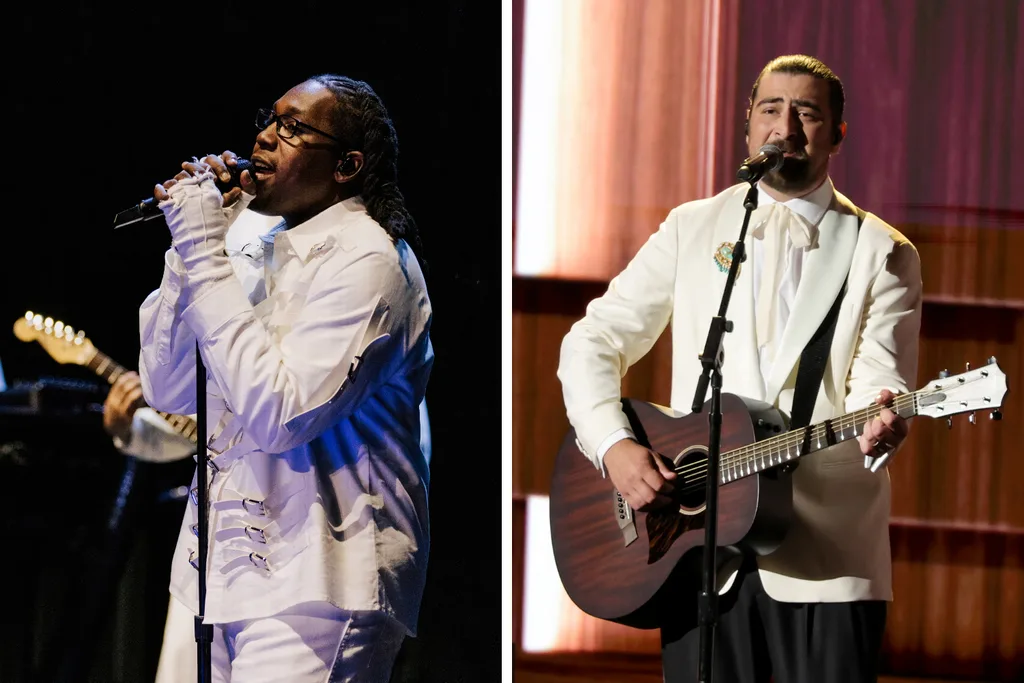
“Gracie Abrams’ third album Daughter from Hell proved that you can have a massive audience, ample hype, and a Billboard #1, and still be snubbed,” Reid explained. “Meanwhile Noah Kahan missing an Album of the Year nomination while receiving just one nomination overall for Contemporary Folk felt like a narrow acknowledgement of the year he’s had and the beauty of his The Great Divide: The Last of the Bugs record.
“But for me, my biggest bugbear is with Lily Allen’s West End Girl. It’s a concept album masterpiece, and the world she created around it was such an iconic feast for fans.”
What’s more, rap was shut out of Album, Record and Song of the Year. Don Toliver’s Best New Artist nod is the genre’s only presence in the top four categories, a sharp drop from last year, when three rap albums – GNX by Kendrick Lamar, Let God Sort Em Out by Clipse, and Chromakopia by Tyler, The Creator – were up for Album of the Year.
The new Best Asian Pop Music Performance category caused quite a divide before the nominations were even released, causing BTS to skip the 2027 Grammys entirely as they released a statement declaring that music shouldn’t be divided by region or language.
“I think the exclusions that we’re seeing and all the controversy around Asian pop tells us that you can make progress on gender representation, which they’ve absolutely done, and I know they’ve worked very hard in order to make that gender parity a little bit better in terms of who votes and how the voting works, but you can do all that and you can still have blind spots around genre and around race and around language,” Reid said.
“You know, like the fact that rap has an absence from Album of the Year, Record of the Year, Song of the Year. To me, it really raises questions about how closely the voting body is engaging with that music.”
How far do the Grammys still have to go?
It would be remiss to not acknowledge the meaningful changes that the Grammy Awards have implemented over the years.
“Between 2019 and 2024, the Academy added more than 3,000 women voting members. Its 2026 intake added over 2,300 voting members, of whom 33% were women and 53% were people of colour,” Reid explained. “Also, removing nominations review committees from the general and genre fields is a substantial step.
“But a more transparent process doesn’t automatically produce a more representative result.”
The benefits of many of these reforms won’t be visible for a few years, and while this year is an encouraging sign, rap’s omission exposes how “progress needs to extend across genres and hold over time”, Reid added.
-
-
-
Native ad body. Sponsored by %%sponsor_name%% -
-

-
Native ad body. Sponsored by %%sponsor_name%%
The good news? The industry has seen a shift.
While there’s always room for progress and change, that doesn’t mean there’s no room for celebration.
This year’s Grammy nominations signal a shift in recognition for the women who have been making influential and experimental music for decades.
“I do think the institutions are now catching up. It feels so encouraging to see several women celebrated simultaneously, without one being treated as the exception,” Reid said. “I hope it becomes a turning point, but that’s something we’ll establish through what follows.
“If we keep seeing women recognised across genres, career stages and creative roles, this year will look like part of a lasting change.
“If the industry celebrates the headline and moves on without changing who gets investment and decision-making power, then it would be another historic headline with business as usual underneath.”
There can be a danger in becoming too complacent about the industry. If women, underrepresented groups and genres have learnt anything about recognition, it too often becomes a headline, rather than a movement.
This year, difference is being celebrated. Here’s to hoping that’s reflected in the wins, jobs, and sounds to follow.

Related stories
Native ad body.
Native ad body.
Native ad body.