Women have enough unnecessary pressure as it is, and “bouncing back” after pregnancy shouldn’t be one of them.
For generations, we’ve been fed a series of ‘ideals’ — the ideal body weight, height, hair, eyes, and skin — and these expectations have extended far beyond appearance. Whether it’s said directly or not, we’re taught to be small and quiet, and to reduce our ambition as we reduce the kilograms on the scale.
If that wasn’t enough, when a woman gives birth to human life, society teaches us to cover up any evidence of the miracle as quickly as possible.
Women are glorified for picking themselves up and constantly exceeding the standard, and while these celebrations are justified and needed, they also unconsciously set a standard for other women.
Rarely is a woman celebrated for being messy, vulnerable, or flawed. The headlines are only ever written when we’re healed, and they are more frequent when the healing is done in record time, subconsciously pitting women’s journeys against each other in a race to a finish line no woman asked to cross.
From magazine covers to wellness advertisements on national TV, women have been told to “bounce back” for years.
Unfortunately, that expectation is far from over, and — while this may come as no surprise — the 2026 Victoria’s Secret fashion runway reignited the debate.
Speaking to WHO, pelvic floor physio Heidi Barlow unpacked the real fears beneath the ‘snap back Olympics’ debate that erupted online, revealing the advice women should be hearing instead.
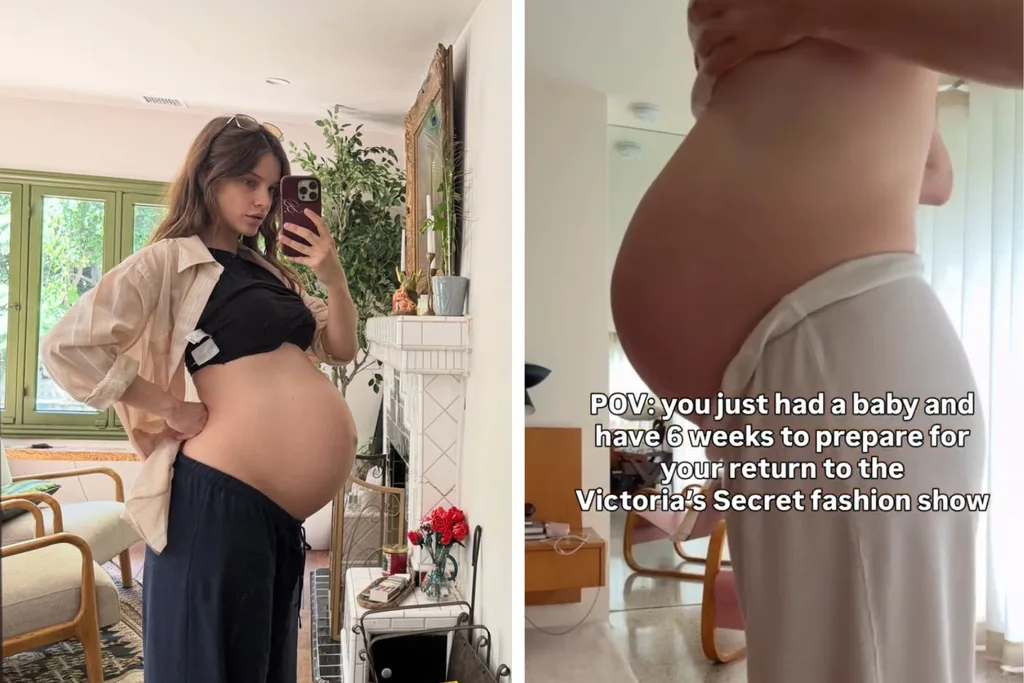
Barbara Palvin walked the Victoria’s Secret runway 41 days postpartum
The Victoria’s Secret fashion show returned on Monday, October 19, and the response was a confusing one.
While many people praised the glamour, the pop-star performances, and the nostalgia of the legacy Angels, hardly anyone was talking about the reason it was cancelled back in 2019, and how it seems to have returned to business as usual as if no time had passed.
Sure, Kylie Jenner wearing the $71 million Fantasy Bra sparked some backlash from Victoria’s Secret superfans who called out the show for choosing Kylie for her star power rather than rewarding a model who has worked in the industry and worn those insanely heavy wings for years.
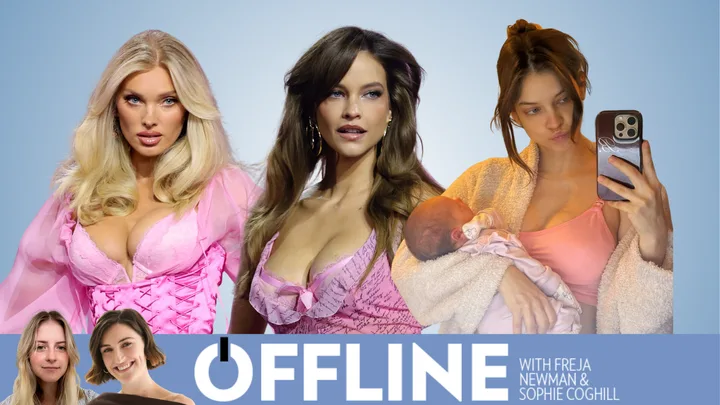
However, in the end, the biggest headlines were the ones women have read for generations — headlines celebrating models Barbara Palvin and Elsa Hosk for their “jaw-dropping transformation” on the Victoria’s Secret Fashion Show weeks after giving birth.
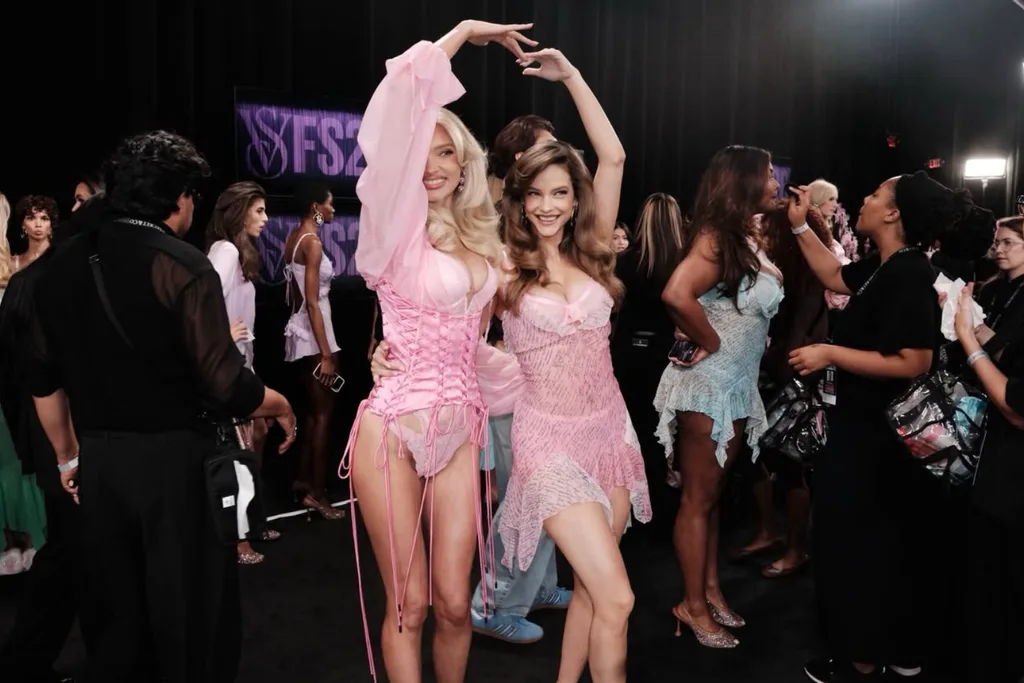
Barbara Palvin walked the runway just 41 days after giving birth to her first child. Elsa Hosk walked at 12 weeks postpartum and shared the fitness routine she started at six weeks to get back into shape.
The problem isn’t Barbara or Elsa
The internet is divided, and not because people have a problem with these supermodels.
If anything, that’s the one thing people can actually agree on: that Barbara and Elsa deserve their flowers.
For these supermodels, this is their livelihood, and they have access to resources that not everyone has. Recovery looks different for different women and bodies, and they can return to work if they feel ready and able.
However, it has reopened the conversation about the pressure women face to “bounce back” after pregnancy – a pressure that still exists whether or not someone is walking the runway.
“It’s her body and it’s her decision and it’s her pregnancy and her recovery,” Barlow told WHO. “And I think every woman’s journey should be celebrated.
“But I can also appreciate the other side of it where this is not the standard recovery for most women.”
Barbara herself also took to Instagram to weigh in on the debate, sharing the “messy” side of her postpartum recovery that people missed as she walked the catwalk.
“A huge thank you to @victoriassecret for embracing me exactly where I am in my postpartum journey and making me feel so beautiful and confident,” she wrote. “I mean, we were literally sewing nursing pads into my bras backstage! A little reminder of the reality behind all the glam.
“Going back to work was a choice I was lucky enough to make. And while I’m so grateful for this opportunity, I can’t help but think about all the mothers who don’t have that choice.”

The model then went on to emphasise that “every postpartum journey looks different, and none of us should ever feel the need to compare”, opening up about how her “everyday postpartum reality looks very different” from what people saw at the Victoria’s Secret Fashion Show.
“Because whether you’re walking a runway, going back to work, or simply making it through another sleepless night, we all have one incredible thing in common: we created a miracle,” she wrote online. “And that alone deserves to be celebrated.”
Barbara and Elsa didn’t ask to be glorified, and Barbara speaking up about the unspoken realities of postpartum recovery is proof of this.
The problem isn’t Barbara or Elsa returning to work. It’s the bounce-back culture that’s fed to women over and over again, and the widespread glorification of those who do.
The problem is an industry that defines what a ‘sexy woman’ looks like — one that doesn’t include stretch marks, bumps, or curves — and the way this trickles down into women’s psyches.
The mental health toll of these headlines
While many women know that Barbara and Elsa are not the standard, that hasn’t stopped them from comparing themselves anyway.
“My baby is nearly a year and a half at this point and honestly, good for her I guess but this does nothing but make me feel bad about myself,” one user commented on Reddit.
“As a 5-week postpartum first time mum I really wish this didn’t pop up in my feed,” another wrote on Instagram.
This speaks to a broader issue that has existed in Australia for quite some time.
According to Flinders University researchers, up to 75% of Australian women report concerns about their body image after giving birth, with many feeling the pressure to “bounce back” to their pre-pregnancy shape. A review published in Body Image shows that these struggles are not just personal, and that cultural expectations, partners, and families influence this mindset.
“I would say definitely for the women that I see in the clinic, I have lots of conversations where I will be encouraging them to be kind to themselves when they come in and say, ‘When am I going to be able to fit into my pre-pregnancy clothes or when is this C-section scar going to resolve?'” Barlow said.
“All of those sorts of things definitely take time, and they take lots of exercise and rebuilding strength and getting good quality sleep and eating well and hydrating well and all of the things that are really difficult for everyone to be ticking all of those boxes in the early postpartum period.”
-
-

-
Native ad body. Sponsored by %%sponsor_name%% -

-

-
Native ad body. Sponsored by %%sponsor_name%%
What is the usual postpartum recovery process?
Barbara and Elsa’s recovery process is not realistic for most women.
“It’s unrealistic to expect everyone to look like that at six weeks postpartum,” Barlow explained. “In the clinic, it takes most women six to 12 months to feel like themselves again.
“It’s good that she has actually come back since the show and that she has voiced that she hasn’t recovered completely and she hasn’t healed completely, as it’s important for us to remember that what we see on the outside is not the full picture and what could be going on beneath the surface.”
When it comes to recovery, Barlow explained that it’s not based on “appearance”, unlike what the headlines might imply.
“There’s a lot going on behind the scenes,” she continued. “The fact that someone can look amazing doesn’t mean that everything is perfect beyond that.”
What message should women be hearing instead?
While this focus on Barbara and Elsa has reignited the expectation for women to “bounce back” after pregnancy, it also opened the door for women to speak up about the pressures they face.
“Be kind to yourself,” Barlow advised. “Society gives us this pressure to get rid of all evidence of pregnancy as soon as you give birth.
“Pregnancy recovery is a slow process. Embrace the small wins, like getting out of the house and walking around the block. A catwalk is not everyone’s normal.”
It’s very rare that women’s health is discussed with nuance and care, and this debate allowed space for the messaging that women should have been hearing their whole lives.

Related stories

Native ad body.

Native ad body.


Native ad body.