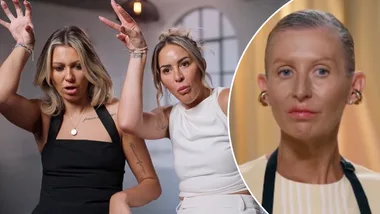
Stan Australia, and the producers behind Married at First Sight and The Voice just launched its latest reality series, Turned On: Dirty Sexy Money, on May 29, and it’s the first of its kind.
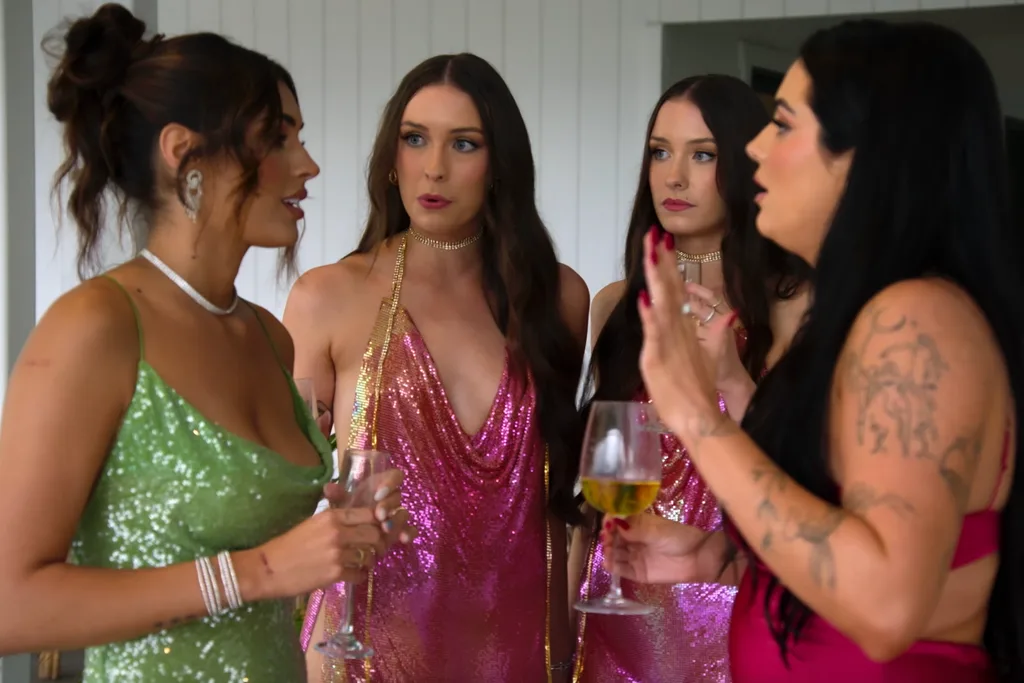
The show, set on the luxurious Gold Coast, dives into the world of adult content, putting Australia’s top 1% of OnlyFans and adult content creators front and centre. Spotlighting female entrepreneurs who earn over $1 million a year – such as well-known “stunt creators” like Australia’s Annie Knight and the UK’s Lily Phillips – the series navigates the cutthroat business rivalries, competitive pressure, and interpersonal drama that exists between creators in the industry.
With episodes dropping weekly every Friday, the unscripted series promises to peel back the curtain on the industry, breaking common misconceptions about the gruelling hours and sacrifices required to stay on top.
But, between the glamour and the conflict, there’s a question the show only half-answers: what does success on this platform actually look like for most women?
Speaking to WHO, Annie Knight unpacked what she hopes the show will expose about the reality of the industry, and was candid that while she and her peers are making millions on OnlyFans, they’re the exception, not the blueprint.
“A lot of people in the industry only earn about $100 a month,” Knight tells WHO. “It’s not like you just sit back and the money rolls in.”
Alice Child, Sydney-based Somatic Sexologist and founder of therapy service The Bedrock Clinic, explained to WHO how the sex work industry is “often tarred with misunderstanding, judgement, and sexual shame”, and that the conversations Turned On: Dirty Sexy Money has the opportunity to spark must be approached with more “nuance” than the OnlyFans industry is generally afforded.
However, is reality TV the best format to bring meaningful visibility to this subject, or will it sensationalise the industry even further, reducing access to resources, community, and conversations that those not in the top 1% desperately require?
The ‘dangerous’ and overlooked financial reality of OnlyFans
One of the greatest misconceptions fuelling the stigma around OnlyFans is the idea that it’s “easy” to achieve success. This has been reproduced in recent Hollywood depictions of the industry, like Cassie’s season three storyline in Euphoria or the series Margo’s Got Money Troubles.
While Knight admits that the latter is the “most accurate depiction of our industry that [she’s] seen on TV yet”, both she and Child explained that the real story behind the industry is still deeply misunderstood.
Child points to something the show glosses over. Creators can’t be found through OnlyFans itself; instead, every subscriber has to be earned through social media marketing. That means a camera, lighting, editing skills, and a brand. It’s a business, not a side-hustle shortcut.
“To find a creator’s page, you have to find it through some other form of social media,” Child told us. “So your marketing skills have to be really good.
“That’s quite prohibitive for people who don’t necessarily want to have their name and face associated with adult content.”
This was apparent in episode one of the series, where the boundaries creators are often pressured to cross – as well as the competitive nature of the industry – was exposed.
“We work hard to stay in that top 1%,” Knight adds. “It’s not easy work.”
“You could see in episode one that Hayley [one of the creators] struggles to make money on the platform,” Knight continues. “And you know, Quinn, her sister [and manager], is telling her she has to work really hard to make money, so I don’t think we’re really glamorising anything.”
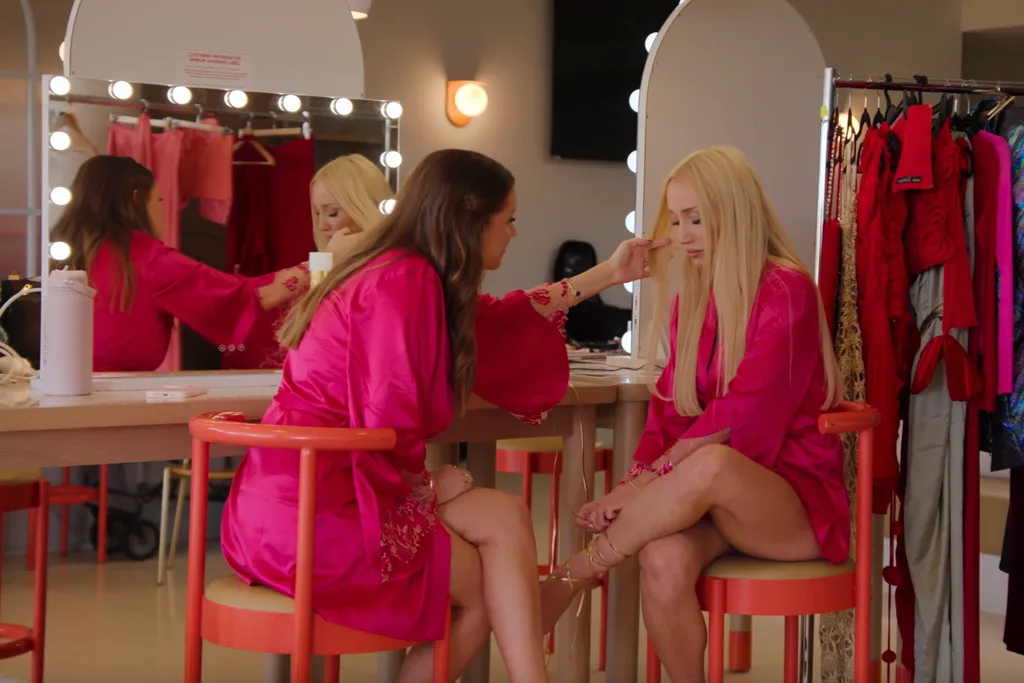
Child pointed out how troubling this scene was, as it raised the question of what happens when money is used to push women past their own boundaries.
“There was a moment on the show where a woman’s boundary was that she only produced solo content,” Child explained to us. “This was important to her; having sex videos on the internet was a boundary she personally didn’t want to cross as a consideration for her future life.
“Despite knowing this boundary, her manager said, in essence, ‘You’re not making enough money for the agency. If you start making content with a man you will earn more money, and then you’ll be able to compete with the more successful women in the agency.’
“That’s an example of using money and competition to pressure and coerce someone’s personal boundaries, which isn’t consent. These situations can make this kind of content creation dangerous.”
OnlyFans isn’t every creator’s full-time job, with Child pointing out that “there is a huge number of people who are on there not because they want it to be their sole income,” but also for reasons such as “creative expression”, “self‑exploration”, or “discovery around their own eroticism.”
However, if this financial coercion is a struggle that creators at the top of the industry are experiencing, it begs the question around the support systems in place for the vast majority outside of their tax bracket.
Is OnlyFans ’empowering’ women?
Both Knight and Child agree that there is a version of this work that’s genuinely empowering, creative, and done entirely on a creator’s own terms.
“It’s our platform that we are in charge of,” Knight explained. “And I think that that’s a really, really great thing for young women to be able to see that we’re allowed to enjoy sex and do it for us and no one else.
“I was always taught sex is bad. You’re not meant to like sex, sex is for men. So I think there’s something so empowering about all us women on the show, because we are feminists, we do feel empowered by our work, and we’re in control.”
However, Child acknowledges that the subject is more of “a nuanced issue.”
“There’s a way of producing amazing adult content [on OnlyFans] that turns on the viewers and empowers the creators,” she said. “There’s also a way of creating content that doesn’t empower the creators and comes at their cost.
“As with any human behaviour, there’s a healthy way and an unhealthy way to produce it, and a healthy and unhealthy way to consume it.”
Therefore, for OnlyFans to remain empowering, it requires support, education, and community resources that are not always easy to access due to the stigma that still surrounds sex work, porn, and sexuality.
“Too many of these people are getting judgment and sexual shame,” Child explains. “Which robs them of access to the very conversations that would help keep them safe in the first place.”
“It’s so important to have conversations about how to make your OnlyFans experience empowering and fun – how to play within your comfort zone, and how to make sure it’s for you, not just for the people who consume your content. There is absolutely a way of doing that.”

Sex education is not keeping up with the expanding rate of the OnlyFans industry
Child notes that “the rate at which porn is being produced, and the accessibility of porn and OnlyFans content, is not being matched by education”, which can lead young people to turn to these sites as “substitutes for education.”
“I’m not anti‑porn or anti‑OnlyFans,” she said. “They both have a role in society, and they can be fantastic when done ethically and with everyone’s consent protected.”
“The problem is that education is not keeping up.”
However, she revealed that there are “resources and agencies that exist” – like “SWOP”, the “Sex Workers Outreach Project, based in Sydney” – which “create a lot of amazing resources for sex workers to keep them safe.” This includes resources on “physical health, sexual health, mental health, boundary‑work resources, support, and peer‑to‑peer support.”
“There’s also something very powerful in spaces outside of one‑on‑one work with a practitioner – sharing stories, seeking community, getting peer support,” Child says. “I think a lot of people feel quite isolated when they’re new and starting their sex work journey.”
“There’s so much safety and power in community.”
Is reality TV the best format for these OnlyFans stories?
Given the lack of education on this industry, the question still stands as to whether the reality TV format – given its often sensationalised nature and plot lines – is the best, or most helpful, way to tell these stories and break down the stigma OnlyFans creators have fought so hard to escape.
“I do think reality TV is, of course, sensationalised,” says Child. “It’s trying to create good television.
“That’s not to say that these women’s stories or experiences aren’t real, or that there isn’t interesting insight into their lives. But when you watch any reality TV show, you have to be discerning and understand that it’s been edited in a certain way and certain lines are presented in a certain way.”
She suggests that a documentary demonstrating the full scale of OF creations – including diverse stories about its benefits and challenges – would have been a more interesting option. One that genuinely attempts to highlight the world of OF creators, whilst removing the shame, judgements, and misconceptions that so often surround topics of sex work, porn and sexuality.
The way we’re currently having conversations about sex work is harmful
So, how should we approach watching a show like this? Is it possible to not ignore the harm that exists in the industry, while also not dismissing the agency of those who have chosen it?
“Sex work, of course, has a complex history – one that includes the exploitation and mistreatment of women and girls throughout history and across cultures,” Child tells us.
“But in the right context and environment, it can be an empowering choice. When somebody has full agency, they can of course enjoy their work as a sex worker or adult content creator and find empowerment, confidence, creativity, self expression, purpose and joy in their profession.
“Both things can be true.”
As a society, we tend to want to only talk in black and white, to claim a hardline stance on whether sex work is good or bad, rather than approaching it with nuance.
Child encourages a way to approach this issue.
“If you’re someone who experiences quite an emotional reaction to the idea of sex workers in your community, and you have a very visceral reaction to shows like the one we’re talking about or to this conversation,” Alice said. “I’d encourage you to ask yourself: have you ever actually spoken to a sex worker who loves their job?”
“If, after that, your opinion hasn’t changed, that’s absolutely fine. But I think a lot of people hold very strong opinions without ever having spoken to people who have real lived experience of the other side.”
Knight offered the same advice to those tempted to be critical of the show.
“Just go in with an open mind,” she said. “Just go in and don’t have any preconceptions, just go along for the ride.”
“You might have like a certain view at episode one, but your whole perception could change by episode eight.”
Dirty, Sexy, Money might be the conversation starter this industry needed. The real question is whether we’re ready to follow it somewhere more honest than a highlight reel.

Related stories
Native ad body.
Native ad body.



Native ad body.