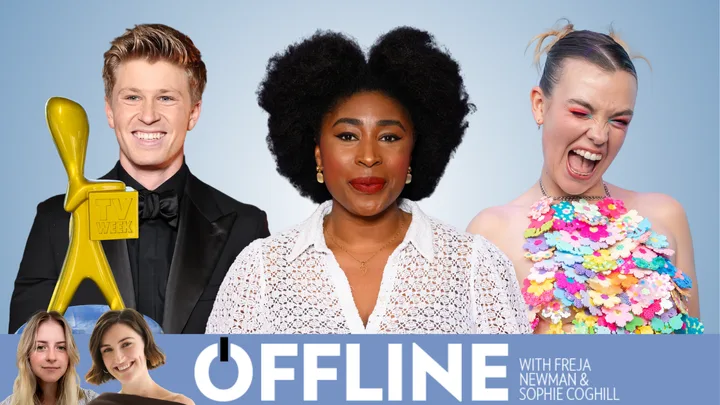
The TV Week Logie Awards – Australia’s annual television industry awards – are where homegrown stories and characters are put front and centre.
It is, naturally, a night to celebrate and remember.
While I love a red carpet and seeing familiar faces get glitzed and glammed for the Down Under Emmy Awards (if I may be so bold as to compare), I also believe we have a responsibility to question what stories, voices, and faces are missing, and how far our television industry still has to go.
Spoiler alert: it’s far!
Now this doesn’t mean there isn’t any incredible or inclusive television being made in Australia right now. From children’s shows like Bluey (that are equally perfect for adults) to Bump, Reckless, Love on the Spectrum, and – of course – the Heartbreak High reboot, Australia has produced shows that have earned international recognition for showing characters and stories that are ‘unapologetically Australian’.
But what does ‘unapologetically Australian’ even mean, and should we try to define it?
Instead, I think we need to observe and be ‘unapologetically’ loud about what stories we’re not seeing or hearing.
Our industry still has a long way to go, and while nuance is a scary thing, shying away from discomfort is not the answer.
The Heartbreak High reboot sparked something that the industry needs to fuel
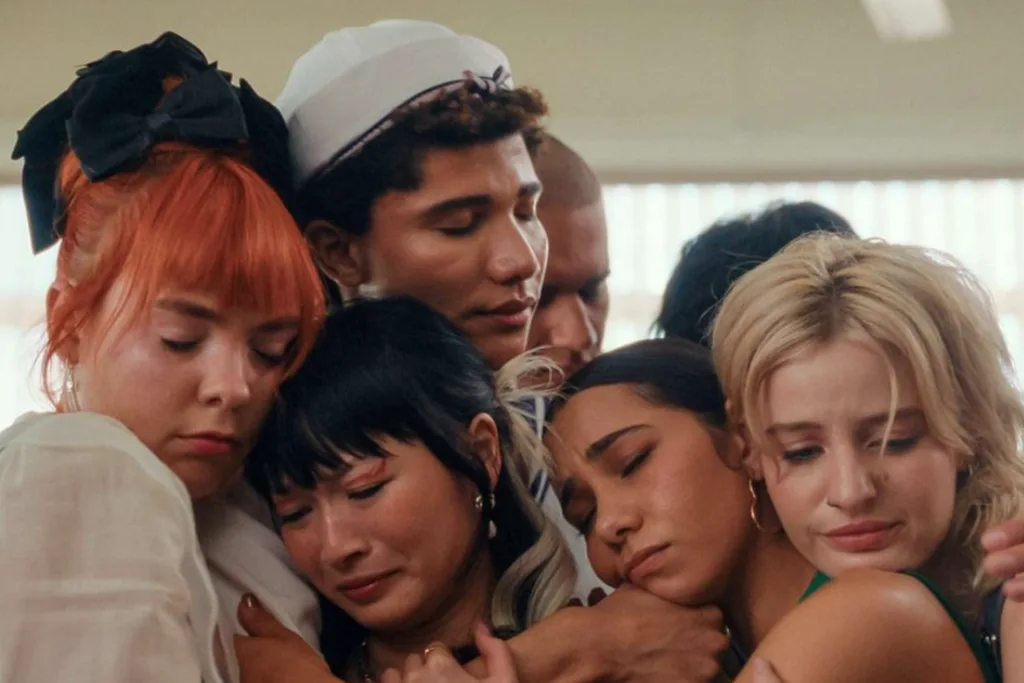
If the success of the Heartbreak High reboot taught us anything, it’s that audiences have been craving representation and characters who have previously been pushed to the sides of our screens…or, more often, excluded entirely.
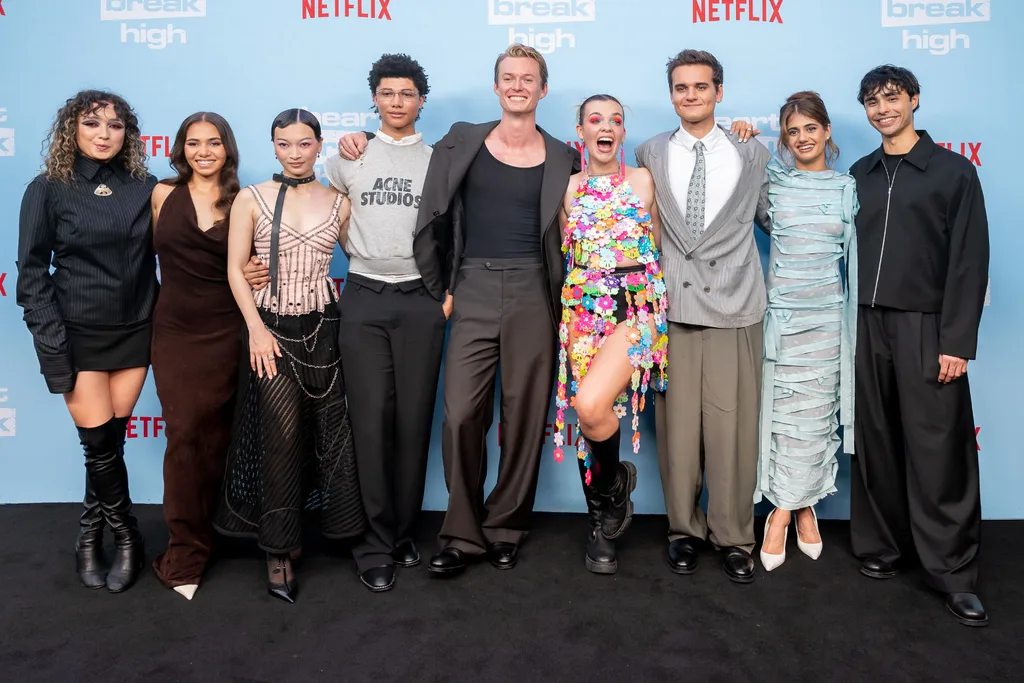
Chika Ikogwe – playwright, screenwriter, and actor who played Jojo Obah in Heartbreak High – and Chloé Hayden – author, activist, and actor who played Quinni Gallagher-Jones in the Netflix series – spoke to WHO on what caused the show’s global success, and got candid about how much further we need to go.
“I think a lot of Heartbreak High’s success, honestly, I credit to the creator of the reboot, Hannah Carroll Chapman,” Ikogwe said. “Who was just so collaborative, and she’s so empathetic and has a genuine curiosity for different lived experiences.
“It translates in the success of the show and the way that people identify with the characters, the way that people love the characters, the way they see themselves in the characters, in the stories, in the particular moments, even.”
For Ikogwe, “the more specific that you get in a story, the more universal it actually becomes”.
“I think it did incredible for a reason,” Hayden reflected. “I do think it is so distinctively Australian in how gritty it is, and in the way that it showcases stories, and the way that it tells these stories, and also just the small nuances.”
And yet, we are still so far behind our overseas counterparts
However, when comparing Australia’s television market to those in America or the United Kingdom, Ikogwe wasn’t afraid to admit that “we’re so, so, so behind and we’re moving at a glacial pace”.
Hayden echoed this sentiment.
“I think Heartbreak did an incredible job at showcasing a type of Australian that television has been too scared to showcase,” she explained. “But with that in mind, Heartbreak was still very comfortable, and the characters were very comfortable, and they were hot, and they were funny, and they were young and conventionally attractive.
“And I think there’s safety in that, and I think it’s absolutely what was needed for the time. I think Australia and the world was not ready for someone that’s autistic and a woman and queer and something else.”
She explained that there’s a discomfort in audiences towards characters that vary too far “outside of what we consider to be standard” – who are marginalised and selfish – and she noticed that in reaction to her character Quinni’s development throughout the series.
“In season one, people loved her because she was sweet and she was cute and she was nice and she put others first and she was this little manic pixie dream girl,” Hayden said. “And then in season two, she was acting like a 16-year-old girl, and she was putting herself first, and she was selfish, and people went, ‘I hate her.'”
For too long, she has watched shows where characters with disabilities are merely there as “a prop for the neurotypical counterpart, or to their job is to project the main character story in some way”.
“Their job is to be a token, to be a prop, to be or to be inspiration porn for the people that are watching that character,” Hayden said. “To be, if she can do it, I can do it.
“The character isn’t written to be a person. The character is written to be a plot device.”
The same is true for other excluded characters, and while Hayden admits that audiences may not have been ready for more nuance when Heartbreak High was first rebooted, they’re certainly ready now.
Who gets to be messy?
We have a long way to go compared to the rest of the world, and it’s more than just ticking a box. It’s about showcasing diverse personalities, preferences and lifestyles in an authentic, flawed, and messy.
As a playwright and a screenwriter, Ikogwe has relished the “autonomy and agency” of creating “the kinds of characters [she] wants to play, the kind of characters [she] wants to create, and the kind of characters [she] would love for other people to step into”.
“People can be a little bit weary of messing with characters that they’re unfamiliar with,” she observed. “It means that those characters are perfect in terms of morality, which I’m like, ‘Who wants to continuously play that? And also, who is that?'”
“Even Jesus flipped a table or two in the Bible, and that’s like as perfect as you can get in terms of like figures in society!”
-
-
-
Native ad body. Sponsored by %%sponsor_name%% -
‘My favourite showcasing of marginalised characters is when it is in the background’
Hayden also admires when representation isn’t front and centre.
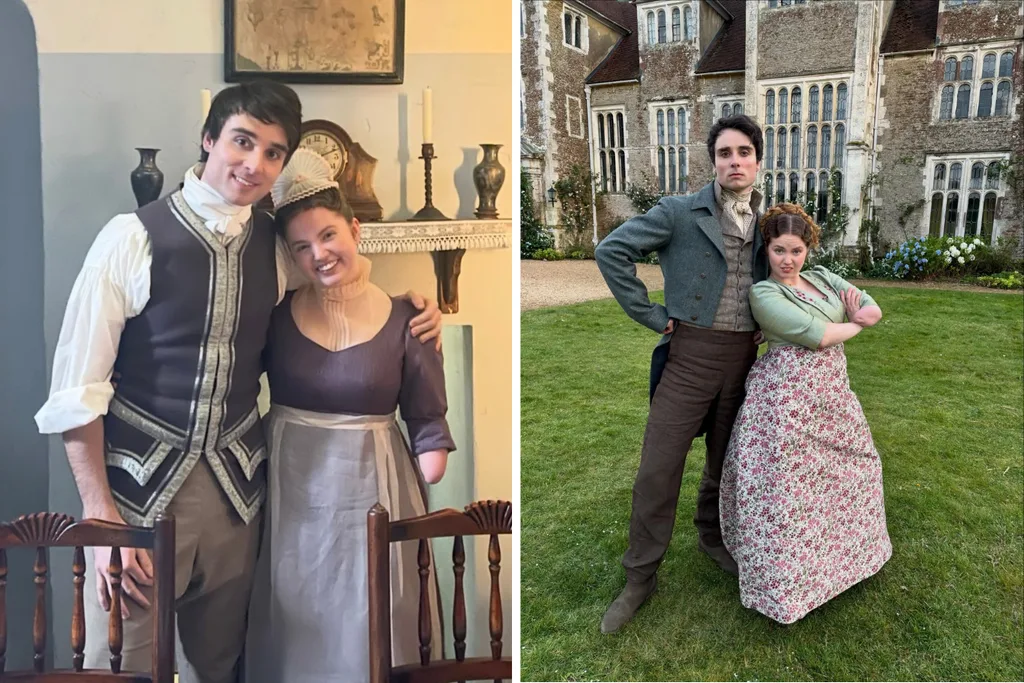
“My favourite showcasing of marginalised characters is when it is in the background,” she said. “I always use Bridgerton as a as an example of this, and Disney does it really well as well.
“If you have a look at particularly the last season of Bridgerton, there’s a character that’s an amputee, and there’s a scene where it’s just a panning shot of a party, and you see two characters gossiping in sign language.
“There’s a scene in Turning Red from Disney where a girl just so happens to have a diabetes thing on her arm, and it’s so much in the background that if you weren’t pausing it to look at that specific frame, you wouldn’t even know it was there.
“That to me is real access, and that to me is real inclusion.”
Hayden notes how “one in five Australians are disabled” and yet “we’re not seeing that same representation on television”.
“I can’t really name any characters in Australian television, where their disability isn’t front and centre of their story.”
What should Australian television look like in the next 10 years?
Change should be more than what’s visible on our screens, although this still very much plays a role. Rather, they should be characters and stories that audiences can be proud of – that actually represent them, in all their messy chaos and imperfection.
“I’m keen to see more dark-skinned people on screens in leading roles, both men and women,” Ikogwe said. “In roles where they have a lot to do, they have a lot of agency, where they’re maybe not so good, and they are flawed.”
“I would love, in the next decade, for us to just be so proud – to have the same positive energy that radiates for shows internationally.
“Let’s fill the landscape with more of that stuff and have like a lot more equity and representation so that people can proudly look within the Australian industry rather than always seeking out.”
There is no shortage of Australian stories and talented voices.
“The creators are there, and the creators are hungry to make it,” she added. “It’s the people with the cash.
“I’m like, ‘Open them gates and let us in! Let’s make these shows!'”
And she’s right. While celebrating Australian-made shows and characters is always a beautiful thing, we’ve been celebrating the same type of story for far too long.
Now, we need to ask the industry to confront the voices it’s still excluding.
The stories are already out there – it’s just whether studios and networks are ready to tell them.

Related stories
Native ad body.
Native ad body.
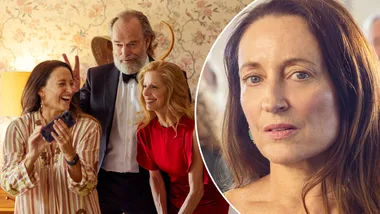
EXCLUSIVE: Dalliance stars Georgie Parker and Heather Mitchell unpack the ‘joyful experience’ of getting older
Native ad body.