Audiences want analogue filmmaking, not just for the effort and friction involved in the process, but for the humanity at its core.
After Christopher Nolan’s The Odyssey was released in July 2026, audiences didn’t just revel in its A-list cast, renowned director, and storyline based on Homer’s epic poem. Instead, interest was centred around how the film was made.
Audiences knew the film was going to be shot on IMAX film cameras, a process that, from pre-production to post, involves many human hands. However, since the film’s release, more of Nolan’s anti-heavy-CGI sentiment and behind-the-scenes production tricks have come to the surface, from building a cyclops in a cave to creating the impression of giants through forced perspective casting.
The blockbuster is putting the art of human effort in the spotlight, and in a world of artificial intelligence (AI), it seems to be exactly what people need.
Nolan isn’t alone in this sentiment. Filmmaker, director, and screenwriter Guillermo del Toro lashed out at the suggestion of using AI at the 2026 Comic-Con in San Diego on July 26, saying he will use “absolutely no goddam AI” for his film Pan’s Labyrinth’s 3D restoration.
“What we’re protecting is the beauty and the redeeming power of art,” the director said.
As AI continues to shift and become more normalised, especially in art – the presence of Australia’s 2026 Omni AI Film Festival being proof of this reality – audiences and filmmakers alike are returning to art-making that is slow, real, and human.
However, it’s not just this appreciation of analogue or old-school filmmaking – it’s a rejection of effortless ones. The question now is whether this sentiment will last.
‘Audiences are at a tipping point’
Speaking to WHO, cinematographer Charlie Sarroff (known for Smile and Smile 2) spoke about why audiences are “at a little bit of a tipping point right now”, leaning very much away from AI and “craving something that just feels a little bit more handcrafted”.
“I feel like people are really gaining more interest in the process of traditional filmmaking,” Sarroff said. “But I don’t think it’s just filmmaking. I think society is really picking up on the fact that we’re getting served a lot of very inauthentic material.
“The AI, of course, is being rammed down our throats, and we’re told that we need to adhere to it and that it’s going to be our future. Meanwhile, it is blatantly ripping off one of the most sacred things to humanity, which is all our artwork.”
Sarroff added: “And it’s not just film, it’s music, it’s literature, it’s design, it’s philosophy, it’s everything.”
Guillermo Troncoso, manager of entertainment publication Screen Realm, spoke to WHO about audiences’ “nostalgia” for this style of filmmaking.
“I think what it’s ultimately coming down to is that people are appreciating craft and skill set,” he said. “In terms of art and creativity, effort is something that I think people maybe took for granted before AI came along.
“When audiences start seeing behind-the-scenes footage of something like The Odyssey and they see the effort, and they see the actual craftsmanship that’s on display in the making of that art, all of a sudden that has value. Then I think the pushback against cheapening art is starting to become louder.”
According to Troncoso, effort is at the centre of audiences’ attraction to films like The Odyssey, just as it was for the cinematic classics that came before it.
-
-
-
Native ad body. Sponsored by %%sponsor_name%% -

-
-
Native ad body. Sponsored by %%sponsor_name%%
Does everyone have the luxury of not using AI?
While opting against AI may be every filmmaker’s desire, not everyone has the budget and marketing power of a Christopher Nolan film.
“Unfortunately, a lot of filmmakers, particularly those that are still coming up and haven’t had the opportunity yet to shoot a feature film the traditional way,” Sarroff admitted. “I think they’re feeling a lot of pressure to have to use these tools, even if they don’t want to.”
However, while Silvi Vann-Wall – journalist and film critic – agreed that “not everyone has the money to make a huge blockbuster”, they believe that “anyone can make a film” and that limited budgets have “made people better filmmakers”, referencing filmmaker Sam Raimi’s creativity for The Evil Dead, where he used a boat for a forest tracking shot.
“Somehow [people] have forgotten that everyone has a filmmaking device in their pockets these days,” they told WHO. “We have phones that can record very high-quality film. You can write a script with your friends on Google Docs. You can do all sorts of things for free.
“But you have to put in the effort.”
What direction is filmmaking heading?
Filmmaking has always evolved with technology, and many of those shifts have made the craft richer and more accessible to both emerging filmmakers and the general public.
What has people worried is when this goes too far, and the human touch is replaced entirely.
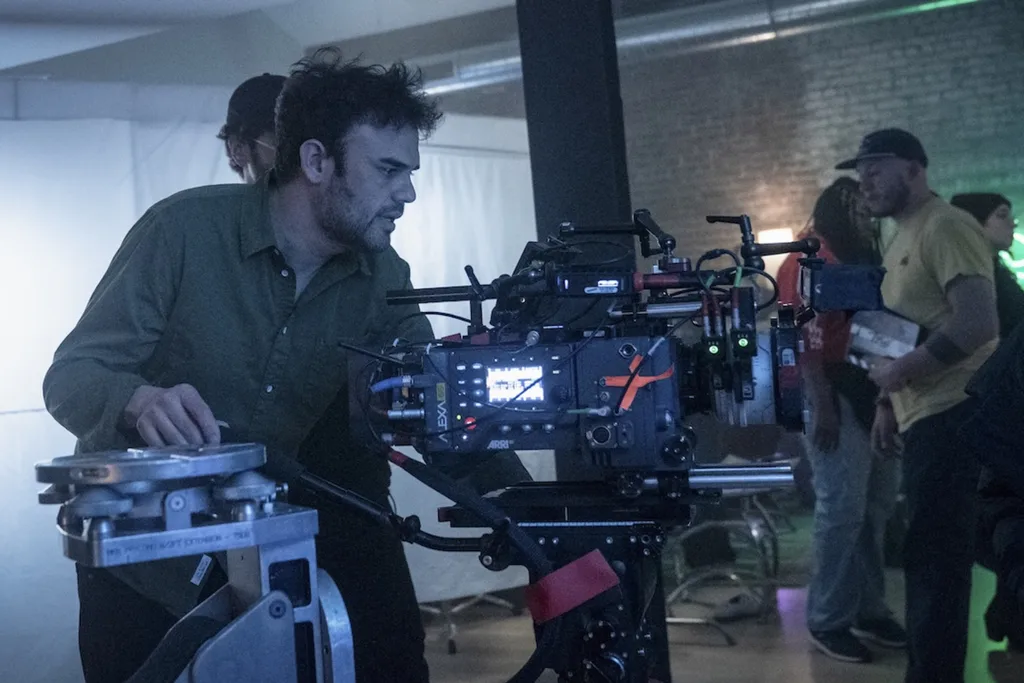
“I’m no Luddite. I embrace new technology a lot, especially with filmmaking,” Sarroff said. “We are shooting on film right now, but I’m embracing new LED technology with lighting, and there are all the post-production methods there. They’re amazing.
“But when it comes to just like prompting a shot or prompting a music track or something like that, there’s just no authenticity to it. If everybody could play the guitar as well as Jimi Hendrix by just prompting themselves to do so, would we really value buying a Jimi Hendrix ticket and go and see the concert?”
The continued and increased use of AI in filmmaking and art is inevitable, according to Troncoso and Vann-Wall. The next step is how studios and filmmakers decide to implement this technology, and what protections exist for the actors and creatives involved.
“I think we’re in the process of losing a lot to generative AI,” Vann-Wall said. “And I think it’s because it’s very tempting as a tool. I can see why people are drawn to it.
“A lot of really established filmmakers who have been praised for their practical and visual effects and their storytelling, like George Miller, are pro-AI now. He judged an AI film festival just recently called Omni – it’s touted as Australia’s first AI film festival.”
For both Vann-Wall and Troncoso, there’s power in audiences questioning and celebrating the value of art when faced with rapidly evolving technology.
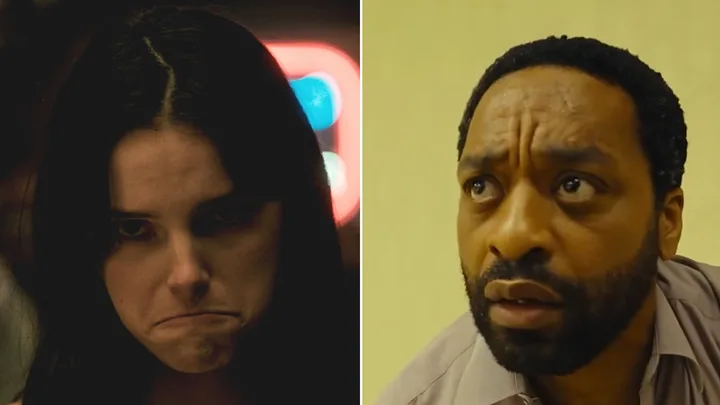
Even before The Odyssey, audiences have been buying into independent films like Obsession and Backrooms, showing Hollywood the value in not rushing towards AI-first productions.
There has been a marriage of art and technology for some time now, and as much as audiences are returning to the nostalgia of old-school techniques, one of the biggest challenges isn’t whether AI will be used in the filmmaking process. It’s whether it will be regulated and harnessed with artists’ consent.
‘It’s not a phase’, but audiences will be ‘divided’
When asked whether audiences’ obsession with analogue filmmaking will actually last, Sarroff believes it won’t just be “a phase”, but there will be a divide as new genres of “AI slop” emerge and social platforms create opportunities for alternative viewing habits.
“I think it’s going to grow, and I think there’s going to be a lot of people that really need to, again, just feel connected to an artist,” he said. “I do strongly believe at the very least it will be divided.”
Troncoso seconded this belief, believing that “we’re not going to see AI entertainment ever leave”.
“I think it’s here,” he said. “And whether that’s good or bad, that’s always going to be up for debate. But I think what we’re going to have is a split of some sort with audiences.”
Not everyone is a fan of niche independent films, and not everyone is a fan of blockbusters or heavy-CGI action sequences. That is the point of art – the subjectivity, the divide.
However, if AI and technology have taught us anything, it’s what we value most in art and what cannot be replaced: our humanity.
“I don’t think [AI] is going to necessarily take over the art of human creativity,” Troncoso said. “The art of human effort.”

Related stories
Native ad body.
Native ad body.
Native ad body.