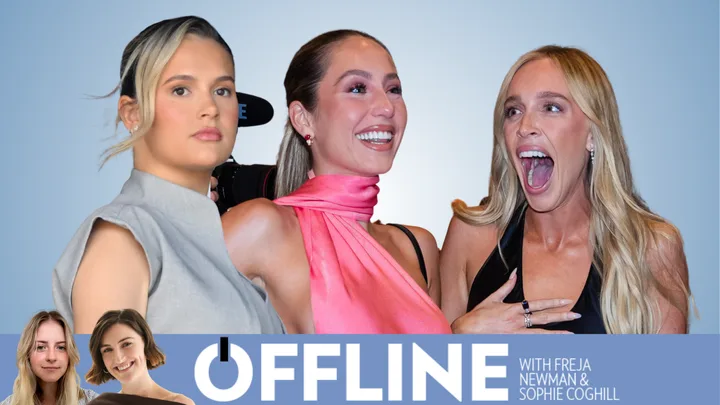
Influencers – whether you follow them religiously or scroll past every ‘get ready with me’ on your feed – are hard to avoid in today’s social media landscape.
While we have always followed the lives of celebrities a little too closely – prying into their relationships and idolising their taste – influencers offer us a level of access that goes even deeper.
Gone are the days of following socialites through a reality TV camera à la Keeping up with the Kardashians, because who needs a camera crew when you have a mobile phone.
While you’d think ten videos a day would be enough ‘insider’ access for one fan to consume, influencers today are also returning to the golden days of long-form reality TV, inviting a camera crew into their homes to give viewers an eight-episode insight into the scandal and the actual person behind the curated feed.
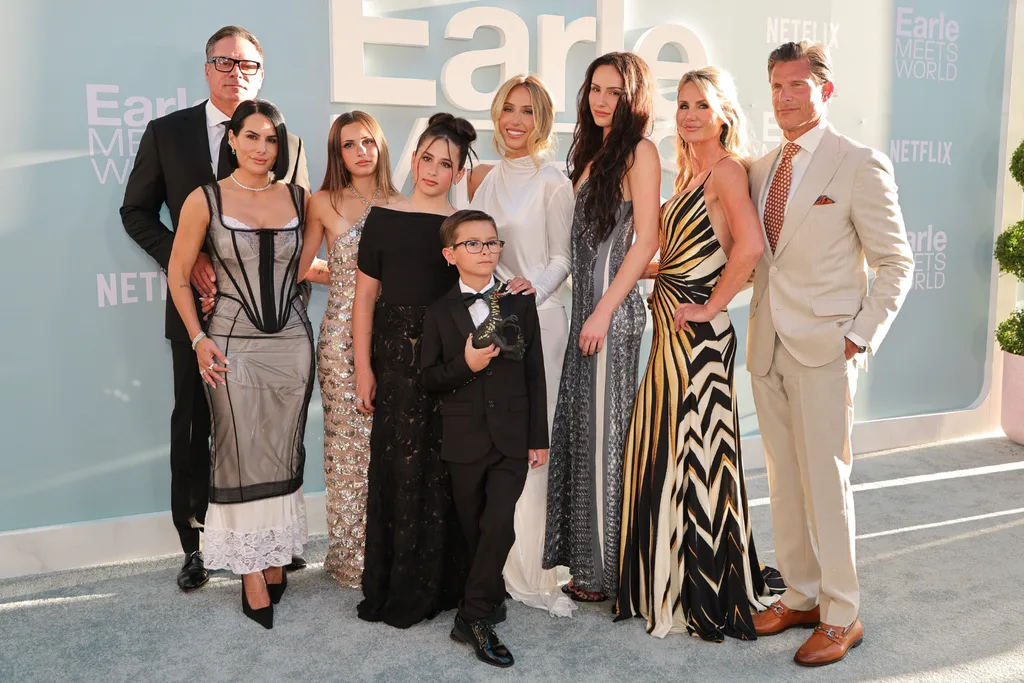
TakeEarle Meets World, Alix Earle’s Netflix documentary that dropped on September 4, where Gen Z’s ultimate “It” girl gets real in an unscripted, unfiltered look behind the scenes of her life and family. Across eight episodes, Earle unpacks her relationship breakdown, her complicated but “close” bond with stepmother Ashley Dupré, and her fallout with Alex Cooper.
But she isn’t the first influencer to invite a documentary crew into her life.
Influencers are the new reality stars
In 2025, British influencer Molly-Mae Hague’s documentary series Molly-Mae: Behind It All was released. In 2022, the Hype House kids (remember them?) offered an exclusive look inside the reality of living in a ‘content house’ with a bunch of 20-year-olds in Netflix’s Hype House.
Either way, influencers aren’t just posting anymore, they’re getting full-blown streaming deals to narrate their own lives.
The influencer documentary is officially a genre now. The question is, why?
Speaking to WHO, Dr Rebecca Ray — author of How to Stop Spiralling (Macmillan Australia), clinical psychologist and keynote speaker — unpacked our obsession with scandal, why the influencer documentary is so appealing, and whether this is healthy.
How has our relationship to celebrities (and now influencers) changed?
We’ve always been nosy about celebrities’ private lives. From turning the pages of a weekly gossip magazine to scrolling through an A-lister’s holiday photo dump on Instagram, there’s something so entertaining about a life that’s unknown and out of reach.
When the scrolling and keeping tabs crosses the line from harmless to compulsive, this, as Dr Ray describes, is a “parasocial relationship”, when “you develop emotional feelings about someone that you don’t know”.
“[A parasocial relationship is when] you actually feel like you’re in a relationship with someone who’s on a screen or on a stage, or someone that you seem like you know a lot about, but you don’t actually have a one-to-one relationship with,” Dr Ray tells WHO. “That relationship has intensified over time because of the rise of social media.
“So what’s happened is we’ve got traditional celebrities — say, I have a parasocial relationship with Dolly Parton and I’m devastated that she died — and traditional celebrities often have huge audiences. Taylor Swift is a great example of this, where we end up with their fan bases giving themselves names because they’ve collectively identified so much with that person.
“However, now that we have influencers, the difference between, say, a traditional celebrity like Dolly or Taylor is that we now get direct access into their lives.”
And, of course, it all comes with a bottom line, with Ray reminding us that “influencers make money out of inviting us into their lives”.
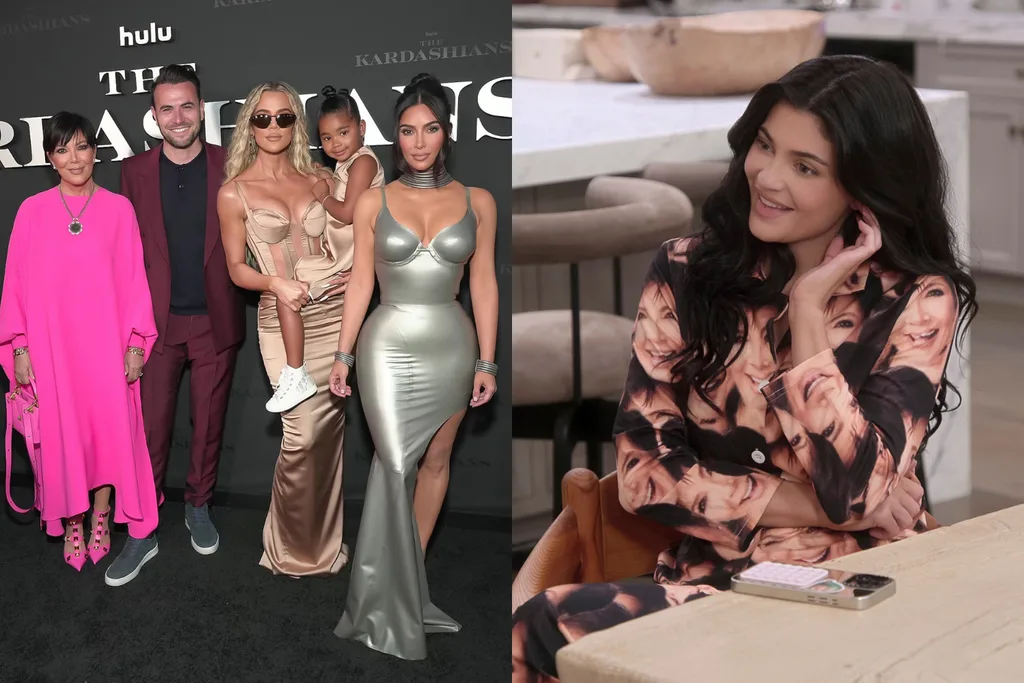
“So, rather than just watching them, say, if we look at the OG [original] influencers like the Kardashians,” she continues. “The Kardashians invited us to watch their lives on TV, whereas influencers now invite us into their lives.”
The difference now is that audiences believe influencers owe them more.
“We’re waiting for the next social media post, which could be in 15 minutes and very likely is going to be in, at most, 24 hours time,” Dr Ray explains about our consumption behaviour. “So that frequency increases our sense of intimacy with [influencers].
“In a way, social media has industrialised intimacy.”
Why the need for a documentary?
However, the question remains: if we already have so much access to a life that’s pretty well-documented already, why do these influencers even need a TV show or docu-series?
“I think it’s attention economy fatigue — people are sick of fifteen-second videos,” Dr Ray suggests. “I think that’s what documentaries offer. They offer depth.”
Also, as much as we have an immense amount of access to people’s lives online, it’s also very well known just how curated social media really is: ‘Sure, you’ve posted a video of you crying to your millions of followers, but is this the real you?’
It’s a scary world out there.
“I do think that the rise of the doco of the influencer is this unspoken promise that this is the access behind the access,” Dr Ray reasons. “I think people have developed this parasocial relationship with influencers now, where they watch everyday content and think, ‘I know this person, or I know this family, and I have feelings about them, either strong negative feelings or strong positive feelings.’
“Then a doco comes out and it’s almost like, ‘Oh, I’m going to find out even more now. Now we’re going to get to the truth behind whatever curated feed we see on social media.'”
What attracts audiences to a scandal?
Despite our inability to avoid the influencer economy, there is still the intrusive thought that trickles in, pushing audiences to not only ask, ‘Why do we care about this person’s life?’, but also, ‘Why does this person deserve a documentary?’
“Influencers also have a reputation for not earning the resources that they have available,” Dr Ray muses. “Even though they might work an extraordinary number of hours in a day creating their content, I think there are widely held beliefs that, ‘Oh, they’re just an influencer; they’re just a grifter, right?’
“So when something goes wrong, or there is a scandal, I think people can sometimes take glee in that because it’s like, ‘Well, they didn’t earn their place anyway.'”
Zero privacy and a scandal? It’s only human nature to be drawn to these kind of stories.
“There’s always something to be said about someone telling their truth around a scandal, and audiences have always been drawn to celebrities’ downfalls,” Dr Ray adds. “Because that makes us feel, perhaps, less bad about ourselves for not reaching the heights of fame or not having access to those resources.”
-
-
-
Native ad body. Sponsored by %%sponsor_name%% -
-

-
Native ad body. Sponsored by %%sponsor_name%%
Is consuming this type of content unhealthy?
Dr Ray tells WHO that “parasocial relationships in and of themselves are not inherently risky from a psychological point of view”.
“However, as with anything, if it’s taken too far and it replaces reciprocal connection,” she adds. “That can be problematic.
“Human beings are social animals, we need connection with each other in order to be okay. That’s one of our foundational needs. So if someone perhaps treats an influencer like a really close friend but doesn’t necessarily have a set of relationships in their own life that meet their own needs, then sometimes that can be problematic for loneliness and things like that.”
So, when consuming influencers’ content – “especially if it’s rage baiting and it’s designed as such because that gets more views, which pays the creator more money” – Dr Ray suggests to “watch your consumption”.
“The research that we have so far about social media – and I think we’re going to end up with the generation that’s always been online treating social media like smoking, or at least I hope we reach that point – is that it actually increases levels of depression and anxiety,” she says.
She also cautions that, despite these people being influencers, they’re still people.
“I’m not here to defend anyone except for just defending humans, full stop,” Dr Ray says. “That is, the people that you’re watching are human, and that means that they have bills to pay in a capitalist society as well, and they’ve found a way of doing it, but that doesn’t always mean that they owe you every part of their life.”
There’s nothing harmful in indulging in some old-fashioned scandal and gossip. However, rather than asking whether Alix Earle and other influencers deserve a documentary, we should instead ask whether we’re getting something real out of watching it, or just filling a gap that a real conversation should.
Sure, the Alix Earle vs. Alex Cooper drama is invigorating, but even at the height of its drama, it only took up maybe a week total of online space. Then, like always, the world moved on. So, make sure you have people in your life you can move on with.

Related stories
Native ad body.
Native ad body.
Native ad body.