Who deserves to be on the cover of a magazine? What social standing or legwork does a person have to endure to be worth that glossy front page?
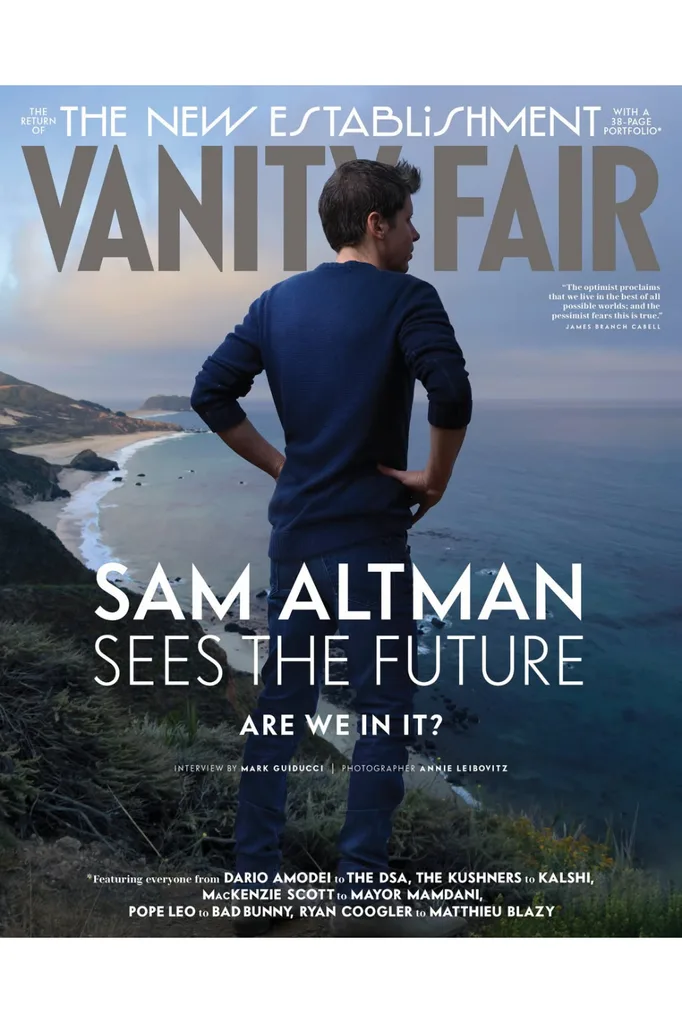
According to Vanity Fair, being a tech billionaire makes the cut.
For Vanity Fair’s ‘New Establishment’ list, which has returned for the first time in a decade, the magazine is identifying people “who have defined the moment”. Their editors have described the list as a reflection of the world “as we see it”, rather than “how we’d like it to be”.
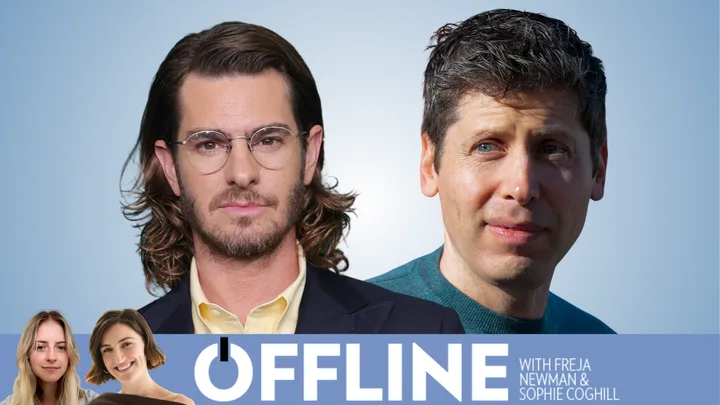
And for better or for worse, OpenAI cofounder and CEO Sam Altman – the subject of Luca Guadagnino’s ‘Artificial’, starring Andrew Garfield – is at the top of the list, and people are not happy.
We’re used to seeing A-listers, movie stars, and pop icons, but when it comes to tech billionaires in power poses, it sparks quite a different reaction.
Playwright Jeremy O. Harris voiced his concerns about this cover and the space magazines give to billionaires in an interview with Vanity Fair’s Global Editorial Director, Mark Guiducci.
“I think you and Anna [Wintour] have so much power over these people’s self-perception,” Harris said. “The Vanity Fair party, the Met Gala gala. That is society to them, and you guys gave that to them without them having to do any of the other legwork.”
Cultural credibility is perhaps the one thing that tech billionaires can’t necessarily buy, and increasingly, the worlds of fashion, art, and entertainment seem to be handing it to them.
So, the question isn’t, ‘Should we take their picture?’
It’s, ‘What message do we want to convey when we do?’
To understand what’s really at stake when billionaires become cover stars, WHO spoke to journalist and author of Man-Made: How the bias of the past is being built into the future, Tracey Spicer AM.
Why do tech billionaires on front covers make us so mad?
Tech billionaires aren’t just reshaping how we work and live. They’re becoming fixtures in the very cultural spaces that should be questioning their influence.
If the uproar over Jeff Bezos’ involvement at the Met Gala, or seeing robots on the runway at Vogue World was any indication of how the public feels about this shift, saying people are mad doesn’t quite do it justice.
“The media both reflects and shapes society,” Spicer told WHO. “A cover is never neutral. Put someone on the front of a glossy magazine and the message is: this person matters, admire them. Especially when it’s a flattering portrayal.
“Jeremy O. Harris nailed it when he said this kind of coverage builds a positive story and creates a mythology around these men.”
As someone who has been in the industry for nearly four decades, Spicer admits that “well-known faces sell magazines, and access is currency”.
By making technology and billionaires culturally accessible in this way, it falls under the umbrella of “glamour-washing or, more broadly, tech-washing”.
“We’ve had greenwashing and pinkwashing: this is the next instalment,” Spicer explained. “Put a robot on a runway or a billionaire on the Met Gala steps and suddenly the technology looks creative, fun, almost human. That’s very handy when you’re lobbying governments and fighting copyright cases.
“I don’t think every editor or designer is in on it. But the effect is real, and we should keep asking who benefits from all that sparkle.”
What are the risks of covers like these?
Glamourising technology in this way can distract from real conversations about existential risk, bias, and privacy. It can also remove already marginalised groups from the story.
“If the face of AI is always a billionaire bloke, then women, First Nations communities, people with disability and older Australians quietly decide AI isn’t for them,” Spicer explained. “So, they stop using it. Their likes, dislikes, personalities, and lived experience aren’t included in the next round of innovations.
“But they’re still on the receiving end of AI decisions, in everything from aged care to the welfare entitlements and the criminal justice system. This further widens the gap between rich and poor.”
We can’t just ignore people in power
Ignoring men like Altman won’t shrink their power, and that’s not at all what I’m suggesting. Whether we like it or not, tech billionaires have immense power and influence over our lives and culture.
It’s how we tell their stories that matters.
“We ask ‘what’s next?’ when we should be asking ‘who pays?’,” Spicer explained. “What’s missing are the low-paid workers who label the data, the artists whose work was scraped, and the communities on the receiving end of automated decisions.
“Good coverage puts those people in the same story as the founder. It fact-checks the big promises, follows the money, and treats these men as powerful people who answer to the public, not as visionaries from another planet.”
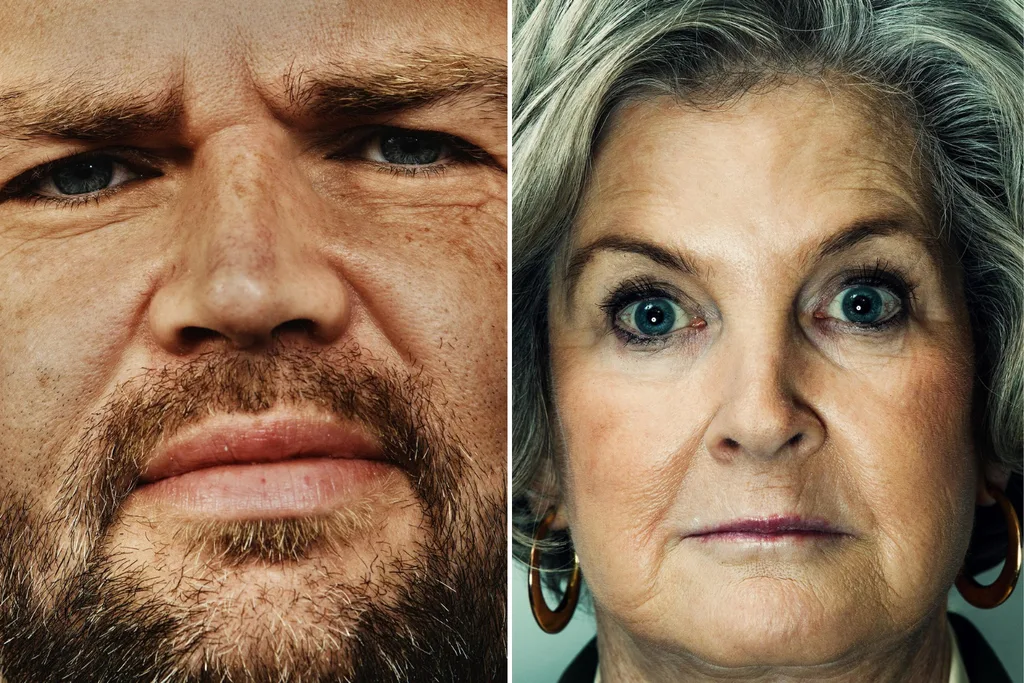
Vanity Fair proved that a cover can scrutinise, with Christopher Anderson’s photos of members of the White House administration late last year – harsh lighting and all.
“THIS is unfiltered journalism at its finest,” Spicer added. “Do the same with tech billionaires: No heroic lighting, no power poses, and put the harms right there next to the picture.”
Whether we are talking about the rise of AI or who is running the free world, it bears remembering that there’s a difference between documenting power and making it aspirational.
“Harris isn’t saying ‘look away’, he’s saying ‘look properly’, and I agree,” Spicer said. “We can’t ignore people with this much power over our lives. But there’s a world of difference between a profile that builds a bridge to them and one that builds a case.
“The test is simple: does the reader walk away better equipped to question these men, or more in awe of them?”
The question isn’t whether these men deserve our attention. It’s whether we’re giving them our admiration without demanding accountability.

Related stories

Native ad body.
Native ad body.



Native ad body.