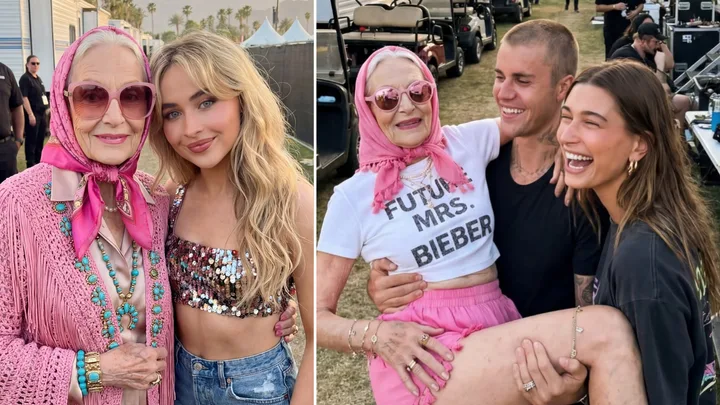
Coachella has a chokehold on our social media feeds right now. It would be quicker to name all of the famous faces not in attendance instead of all of the ones who are, but oddly, there are a few “people” who would make both lists.
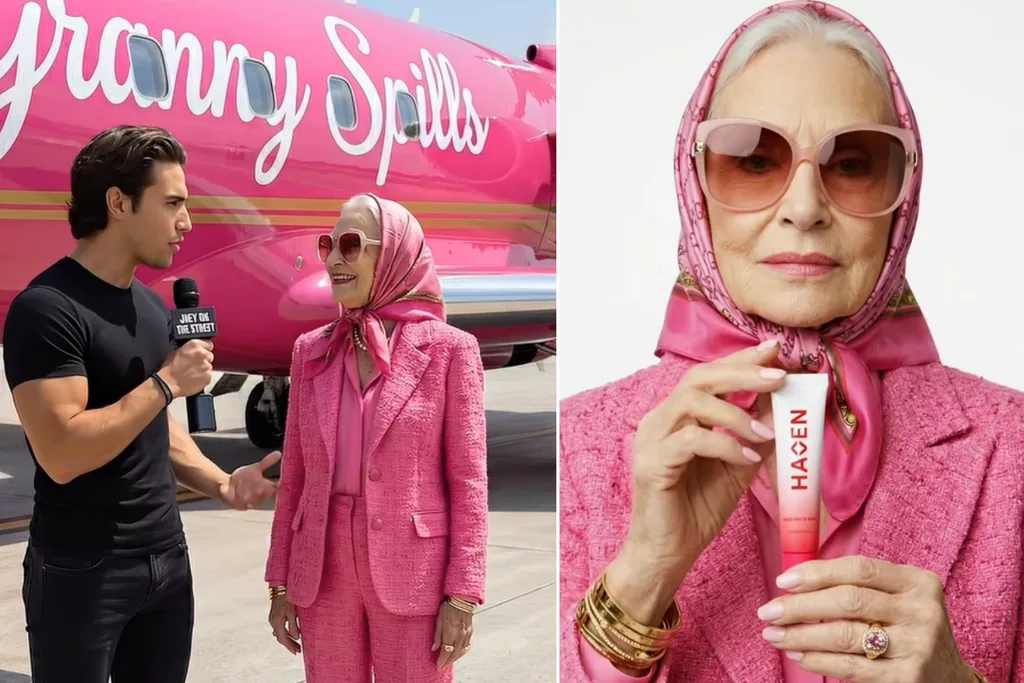
One of which is Granny Spills.
Pictures of the 70-year-old enjoying her time at Coachella and even smiling alongside headliners Justin Bieber and Sabrina Carpenter have racked up millions of likes since the festival began.
But, she is completely fake, and completely AI-generated.
She (or ‘it’) is one of many AI-generated influencers becoming wildly popular on social media.
And, while it may seem like harmless fun to have a lavish granny strut around and be in attendance at the world’s most coveted festival, there’s a very sinister undercurrent to the content and the software used to create her.
Chelsea Bonner, the CEO of ICON Management, told WHO the risks with the trend are dire and limitless.
Why are AI-generated influencers being made?
Basically, people are using AI-generated influencers in a bid for likes and brand deals in order to make money.
And, it’s working.
Lil Miquela, a 19-year-old virual music artist, has 3.3 million TikTok followers and has been featured in campaigns with Prada and Calvin Klein.
Shubu, coined “the world’s first digital supermodel”, was created by photographer Christopher-James Wilson who admitted during a Tedx Talk that ‘she’ was created while living in a “shed” during the COVID-19 lockdown.
The ‘supermodel’ has been featured in Fenty Beauty and Balmain campaigns.
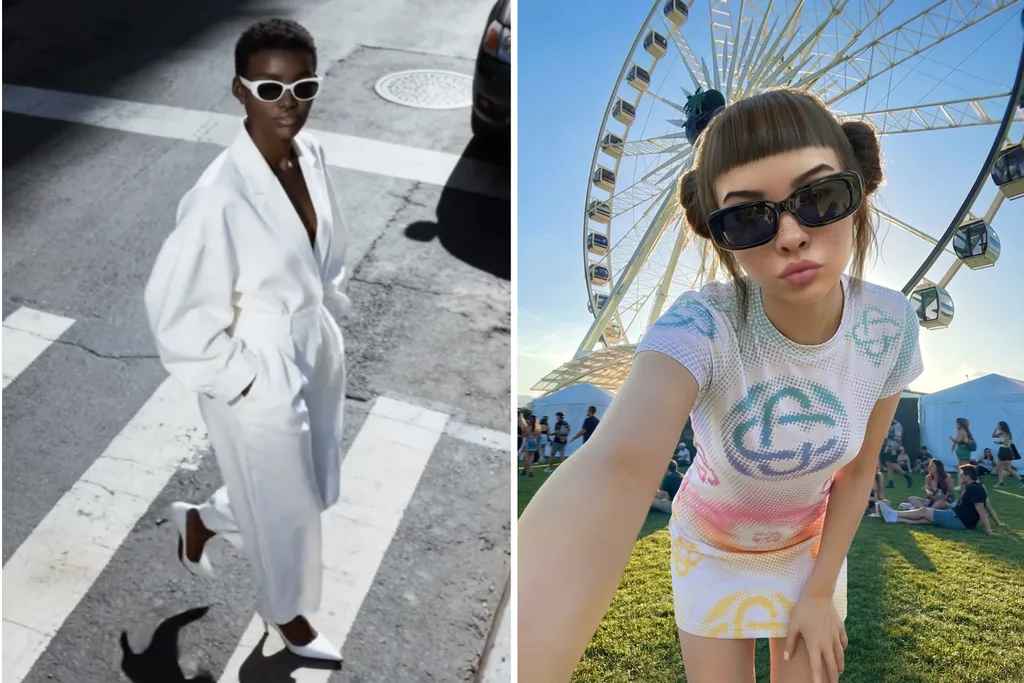
Any money made goes straight to the people who made the ‘influencers’.
Why are AI-generated influencers becoming popular?
There are two reasons why AI-generated influencers are becoming so prevalent, Chelsea explained.
It targets exactly what social media users want to see.
“It’s twofold. The tech developers that are making these AI influencers are making them to suit the audience…. They’re creating a character based on what they think human beings want to see, and if they get it right, they get it really right.
“They’re using humour. With the Granny Spills character, a woman of that age wouldn’t normally dress like that, speak like that, think like that, or hang out at parties and Coachella and functions like that,” Chelsea told WHO.
And, for businesses, it’s “cheap”.
“It’s so cost effective, because you don’t have to pay real talent, you don’t have to pay a makeup artist, you don’t have to pay anybody to shoot it,” she said.
Why should I care?
While the content seems harmless, the software used to create it can be used for bad, bad things.
It’s the exact same software that is used to create deepfake imagery, and as it continues to develop, it’s reach and impact could be disastrous — creating a reckoning with misinformation, threatening the creative arts industry and making it very difficult to decipher between what is real and what is fake online.
And, women will ultimately bear the brunt of it.
“It’s a massive issue, and it’s a very gendered issue as well. You know, 98 per cent of all deep fakes are women and 99% of them are pornography,” Chelsea said. “If you have a look at those accounts, most of the time people following them don’t know that they’re not real.”
Not only can faces be cloned or generated, but voice’s can copied, too.
“I only need about a minute of somebody’s voice and I could clone it and create whole podcast episodes,” she explained.
Chelsea spoke about a podcast she found where the AI-generated influencer was a convincing women’s health doctor.
And after further research, she found it was ultimately a “tech guy” behind the project.
“Some guy owns this woman. He’s made her up in,” Chelsea explained.
“Behind this YouTube podcast from this female doctor who knows everything about women’s health [apparently] is a tech guy who’s putting in a script into an app that spits out a podcast. And, then depending on the views that it gets, he gets paid advertising money every time. So he’s creating money off misinformation from a doctor that doesn’t even exist,” she said.
Also, with AI-generated influencers modelling for fashion and beauty campaigns, the genuine feel and fit of the products is completely “fabricated”.
This has potential to skew body image issues along social media users (as if we need any more of that), as well as blur advertising laws and strengthen scams.
Social media content with AI is going to make us ‘sick’
Ultimately, the seemingly frivolous content made by AI-generated content creators is a clever entry point into normalising this type of content and use of this type of software, and we need to know what our content is made of if we want to have a fighting chance at pushing against it’s harm.
“It’s the same as if you go to the supermarket and you turn over the back of the cereal packet to see whether it’s gluten free or not. You want to know that, because it’s going to make you sick if it’s got the wrong ingredients in it,” Chelsea said.
“If you are following influencers and creators who are not even real and you are holding yourself to that standard, whether it’s body image or skin or hair or age, whatever it is, it, you can’t do that unless you, you have the facts about what you’re following and avatars are a cartoon character.”

Related stories
Native ad body.
Native ad body.
Native ad body.